



Competitor prices change daily. Sometimes hourly. If your team is still checking competitor websites manually or relying on spreadsheets that go stale the moment someone closes the tab, you are likely to stumble on outdated data.
Price monitoring tools automate that work. They track what your competitors charge, alert you when prices shift, and give you the data to respond before you lose the sale.
We reviewed 10 of the strongest options on the market right now. Here are the top three:
Why listen to us?
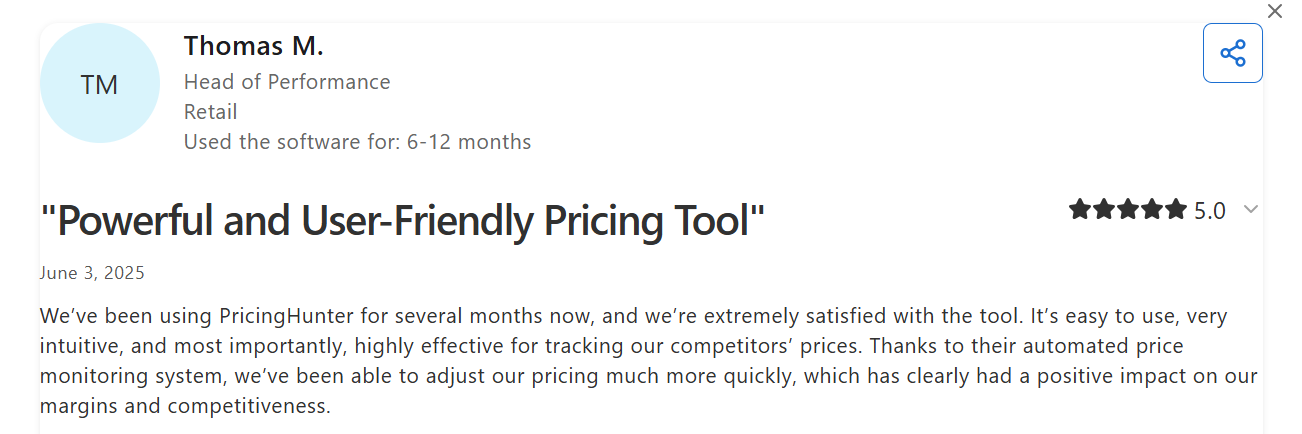
PricingHunter tracks competitor prices for online retailers across hundreds of product categories. Our team has tested, evaluated, or integrated with most of the tools on this list. We know which platforms deliver clean data on day one, while others require weeks of setup before you see anything useful, and some have hidden pricing surprises. This guide is built on that hands-on experience.
What is price monitoring software?
Price monitoring software is a tool that automatically tracks competitor pricing across websites, marketplaces, and comparison engines. It collects data on a schedule, matches competitors to your products, and delivers results in a dashboard or inbox.
10 best price monitoring tools compared
1. PricingHunter
Best for: SME retailers who want affordable, rapid competitor price monitoring with no contracts and no add-on charges.
Price monitoring approach: Automated product matching with daily competitor price alerts and unlimited price history.
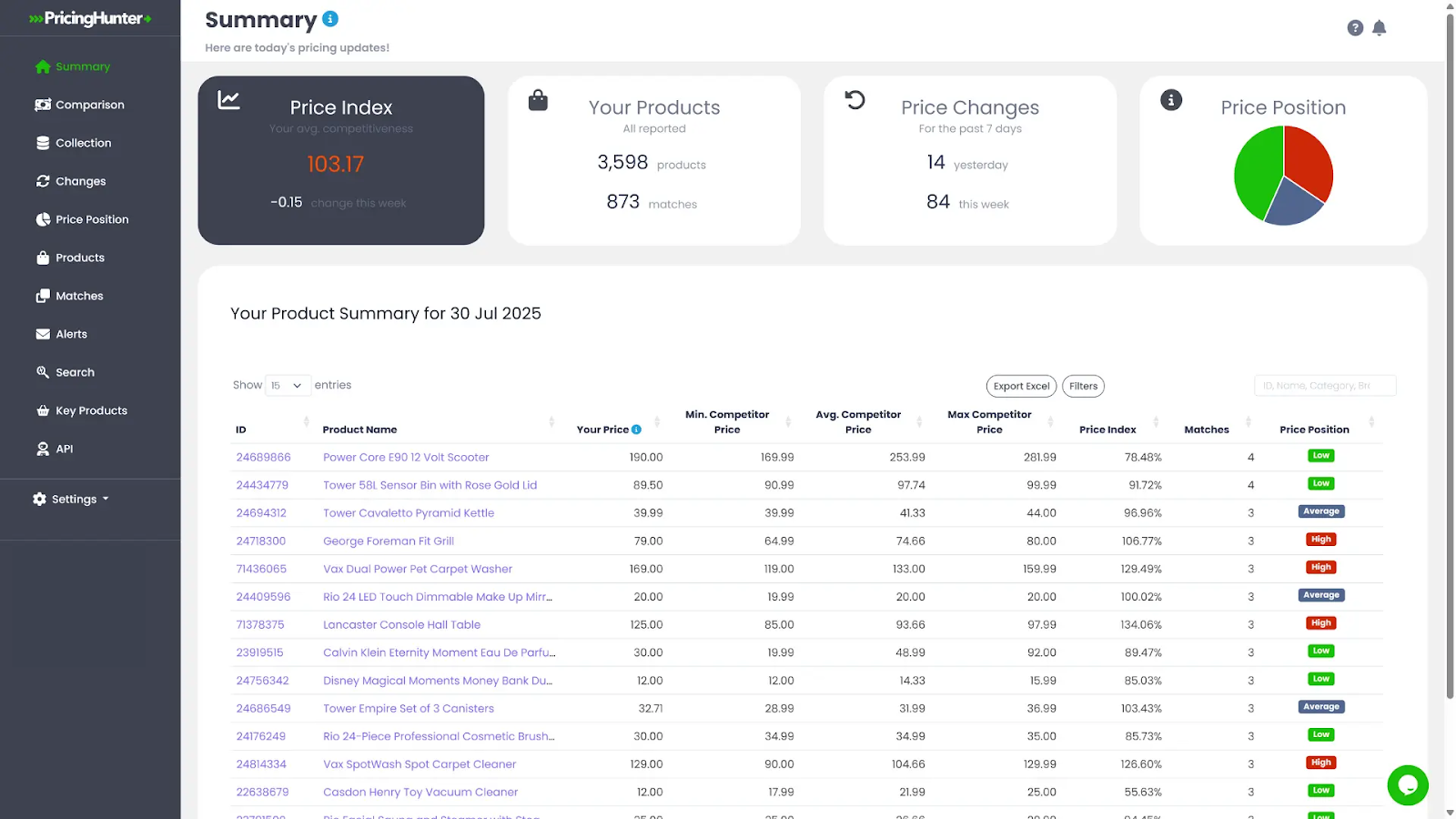
PricingHunter is a price monitoring tool that provides you with daily competitor pricing data you can act on, without the cost surprises or enterprise overhead that come with most monitoring tools.
You sign up, upload your products, and the platform suggests competitor matches for you to approve. From there, you receive daily price change alerts to your inbox every morning, including weekends.
Every plan includes unlimited competitor tracking, automated product matching, full price history with no time limit, and product variant tracking.
Key features
- Unlimited competitor tracking on every plan
- Automated product matching with manual approval
- Daily price change alerts, including weekends
- Price history with no storage time limit
- Product variant tracking (sizes, colours, configurations)
Pros
- Transparent pricing with no hidden add-ons
- Set up in minutes, live data from day one
- Month-to-month flexibility, cancel anytime
Cons
- No built-in dynamic repricing
Pricing
- Essential: $99/mo (200 products)
- Professional: $199/mo (2,000 products)
- Premium $399/mo (6,000 products).
- 14-day free trial. No credit card required.
2. Prisync
Best for: e-commerce retailers on Shopify, Magento, or BigCommerce who want competitor monitoring with dynamic repricing built in.
Price monitoring approach: Product-based tracking with one-click store sync and dynamic pricing rules on all plans.
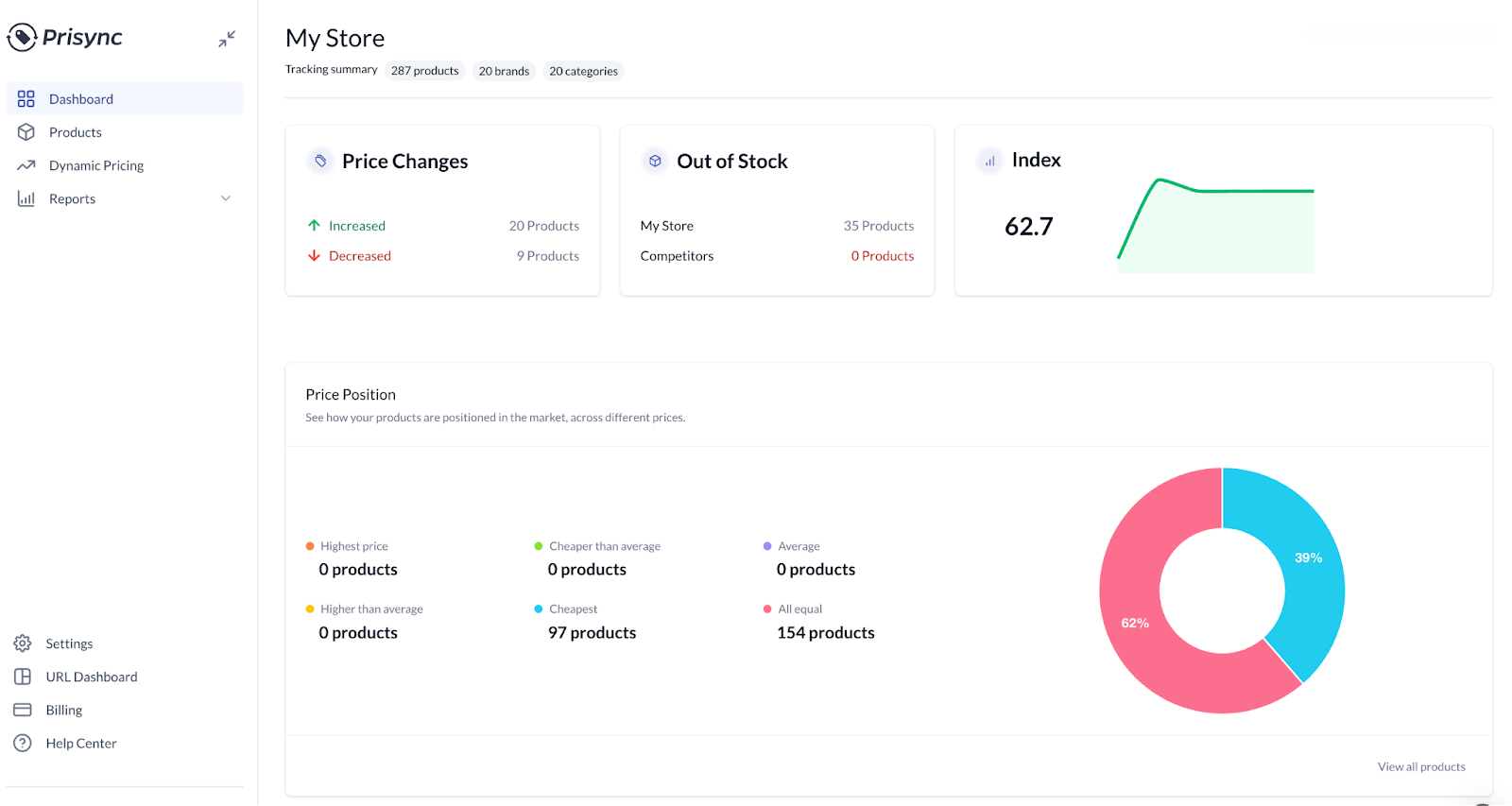
Prisync is a price-monitoring tool that lets Shopify sellers track competitor prices instantly without APIs, complex integrations, or sales calls. You just need to install, sync your catalogue, and start tracking.
Every plan includes dynamic pricing rules, so you can automate price adjustments without paying for a separate repricing module.
Key features
- Product-based pricing with unlimited competitors
- Dynamic pricing rules on all plans
- One-click Shopify, Magento, BigCommerce integration
- Automated competitor discovery
- Stock availability monitoring
Pros
- Transparent published pricing
- Repricing is included natively, not as an add-on
- 24/7 customer support
Cons
- API access costs an extra 20%
- Dashboard customisation is limited
Pricing
- From $99/mo (100 products) to $399/mo (5,000 products).
- API adds 20%.
- 14-day free trial.
3. Price2Spy
Best for: Mid-market retailers and brands that need monitoring, repricing, MAP enforcement, and deep analytics from one platform.
Price monitoring approach: URL-based tracking with up to 8 price checks per day and 25+ built-in reports.
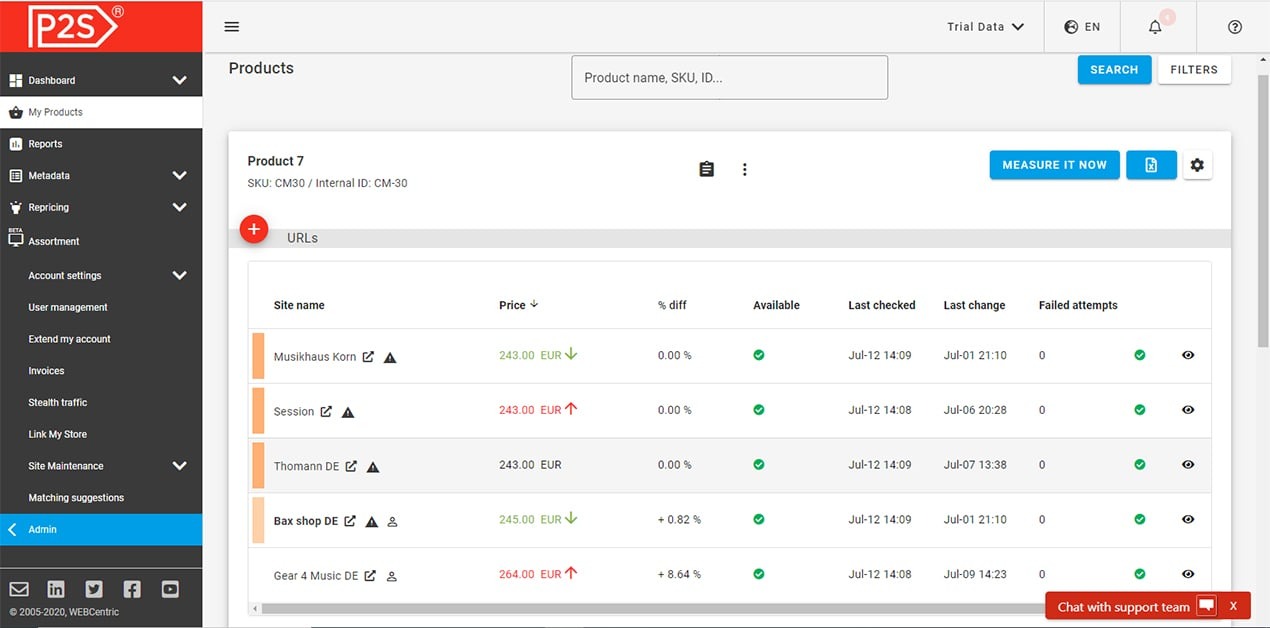
Price2Spy has been around since 2010 and covers more ground than most monitoring tools. Beyond competitor prices, it captures stock availability, shipping costs, and promotional offers. Its repricing module is fully rule-based and customisable, giving teams granular control over pricing conditions.
Key features
- Price monitoring with up to 8 checks per day
- Advanced repricing with custom strategy rules
- MAP monitoring with screenshot capture
- Automatch for competitor product matching
- 25+ built-in pricing reports
Pros
- Published starting prices with a 14-day free trial
- Covers monitoring, repricing, MAP, and analytics in one system
- Integrations for 12 eCommerce platforms
Cons
- Add-on costs for repricing, automatch, and extra users stack up
- A URL-based pricing model is harder to forecast
Pricing
- Starter: $39.95/mo (500 URLs)
- Basic: $157.95/mo (2,000 URLs),
- Premium and Enterprise: custom.
- 14-day free trial.
4. Minderest
Best for: Brands and manufacturers monitoring pricing across distributor networks, marketplaces, and offline channels in 40+ countries.
Price monitoring approach: AI-powered scraping across eCommerce sites, Amazon, Google Shopping, shopping apps, and physical stores.
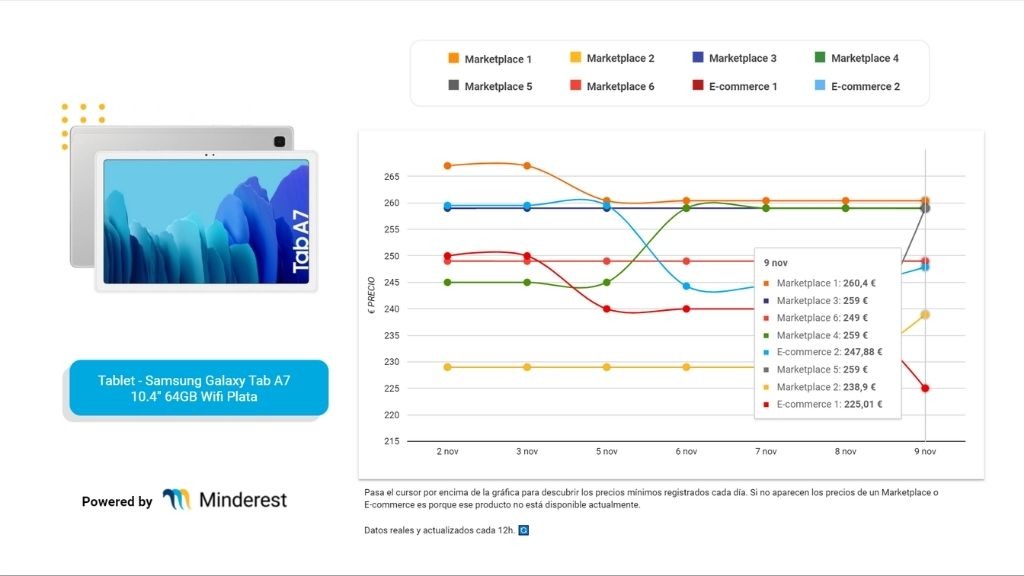
Minderest is built for a different buyer than most tools on this list. Its strength is brand-side pricing intelligence, focusing on tracking how your products are priced across distributor networks, enforcing MAP and MSRP compliance, and monitoring catalogue changes across online and offline channels. For retailers who track competitors’ prices directly, the platform can feel heavy, as there is no public pricing or free trial.
Key features
- Competitor price monitoring across online and offline channels
- MAP and MSRP compliance monitoring
- Catalog intelligence and assortment tracking
- AI-powered product matching
- InStore module for physical retail price checks
Pros
- 400+ customers across 40+ countries
- Covers online, offline, and shopping app channels
- Dedicated customer success manager
Cons
- No public pricing and no free trial
- Minimum 3-month contract
Pricing
Custom only. Contact sales for a demo.
5. PriceShape
Best for: Mid-market retailers who want competitor price monitoring connected directly to Google Shopping ad performance.
Price monitoring approach: Feed-based monitoring that delivers pricing data, margins, and stock levels to the Google Merchant Center.
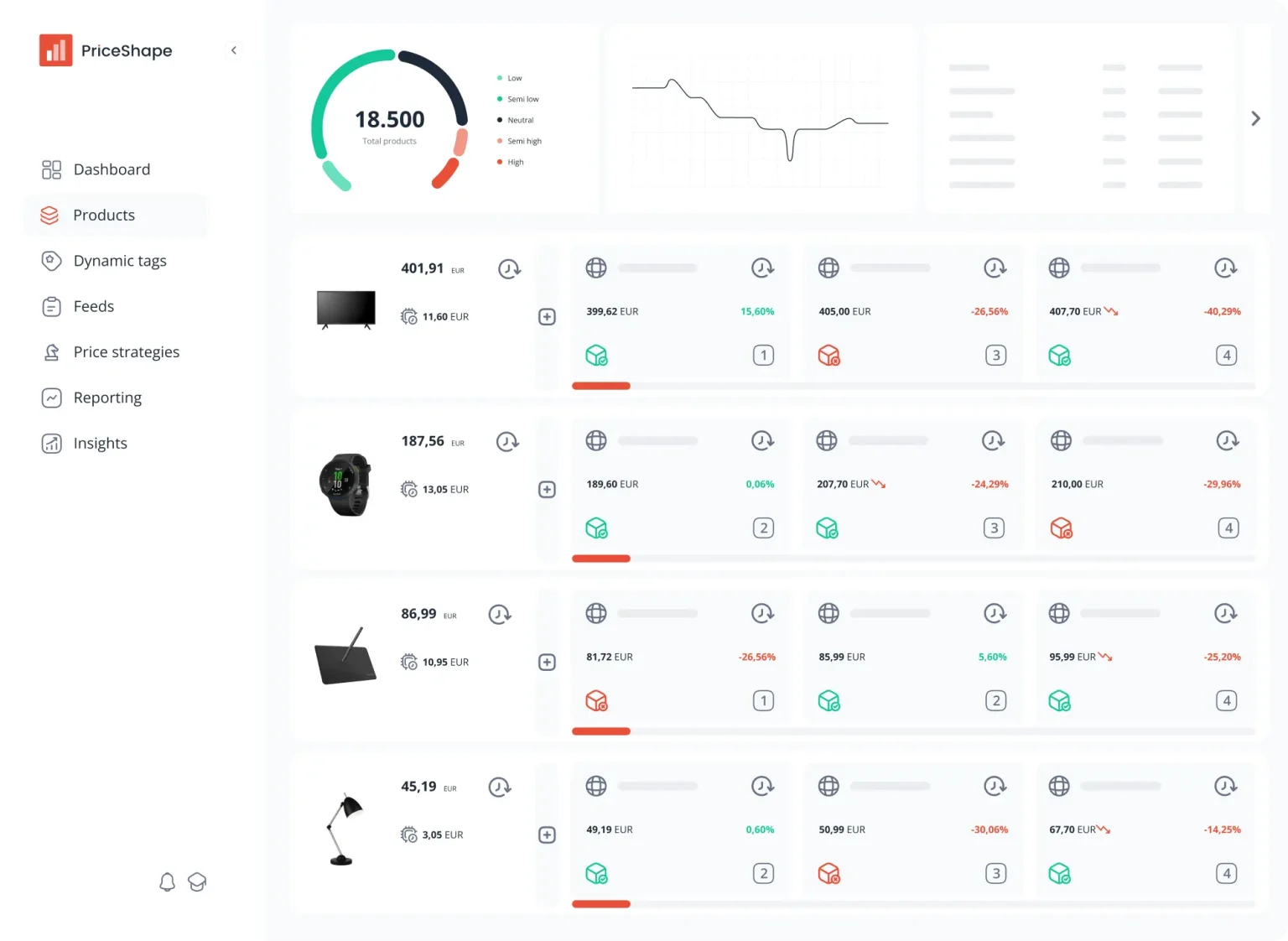
PriceShape is a price monitoring tool that links competitors' prices to where you spend on advertising. The platform delivers a supplementary feed to Google Merchant Center with dynamic labels like “best price", "high margin", or “low stock", so your shopping campaigns automatically focus budget on products where you are competitively priced.
Key features
- Real-time monitoring across websites and Google Shopping
- Dynamic pricing rules (cost-plus, competitive matching, second-cheapest)
- Feed editor delivering data to Google Merchant Center
- Price index scoring and GA4 integration
- Dedicated customer success manager
Pros
- Links pricing intelligence directly to ad spend
- Intuitive interface teams adopt quickly
- Structured onboarding
Cons
- No publicly listed pricing tiers
- No public API
Pricing
From €299/mo. Custom quotes based on catalogue size.
6. Priceva
Best for: Mid-size retailers wanting monitoring and repricing without paying for separate modules.
Price monitoring approach: Competitor price and stock monitoring with formula-based automated repricing and MAP monitoring
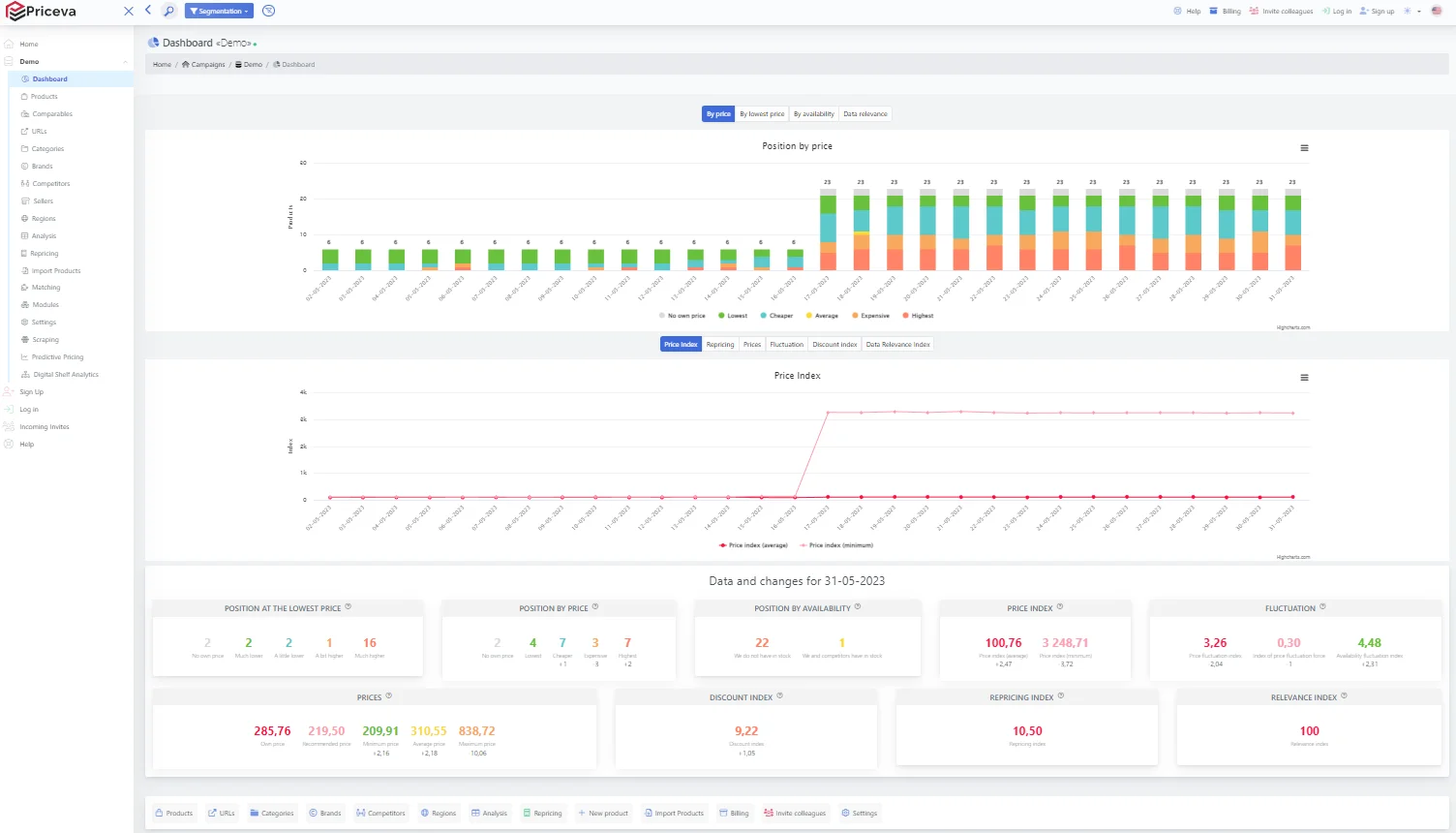
Priceva is what you get when a monitoring tool chooses not to charge extra for basic features that should already be included. Every paid plan includes repricing, MAP monitoring, and multi-format data export.
It also has a free tier for up to 20 products, so you can run it against your own catalogue before spending anything. The interface could use a refresh, but the value for money is hard to argue with.
Key features
- Competitor price and stock monitoring
- Automated repricing with user-defined formulas
- MAP monitoring with page screenshots
- Historical price analysis
- API and multi-format data export
Pros
- Repricing and MAP included, not charged separately
- Free starter tier for 20 products
- Flexible data export options
Cons
- Data accuracy varies by source
- The interface feels dated
Pricing
Free (20 products). Paid from $99/mo. No published tier details beyond the starter.
7. Dealavo
Best for: European retailers and brands that want high data accuracy for promotion tracking, with a free trial to test first.
Price monitoring approach: Automated scraping with a manual QA verification layer where Dealavo’s team checks results for accuracy.
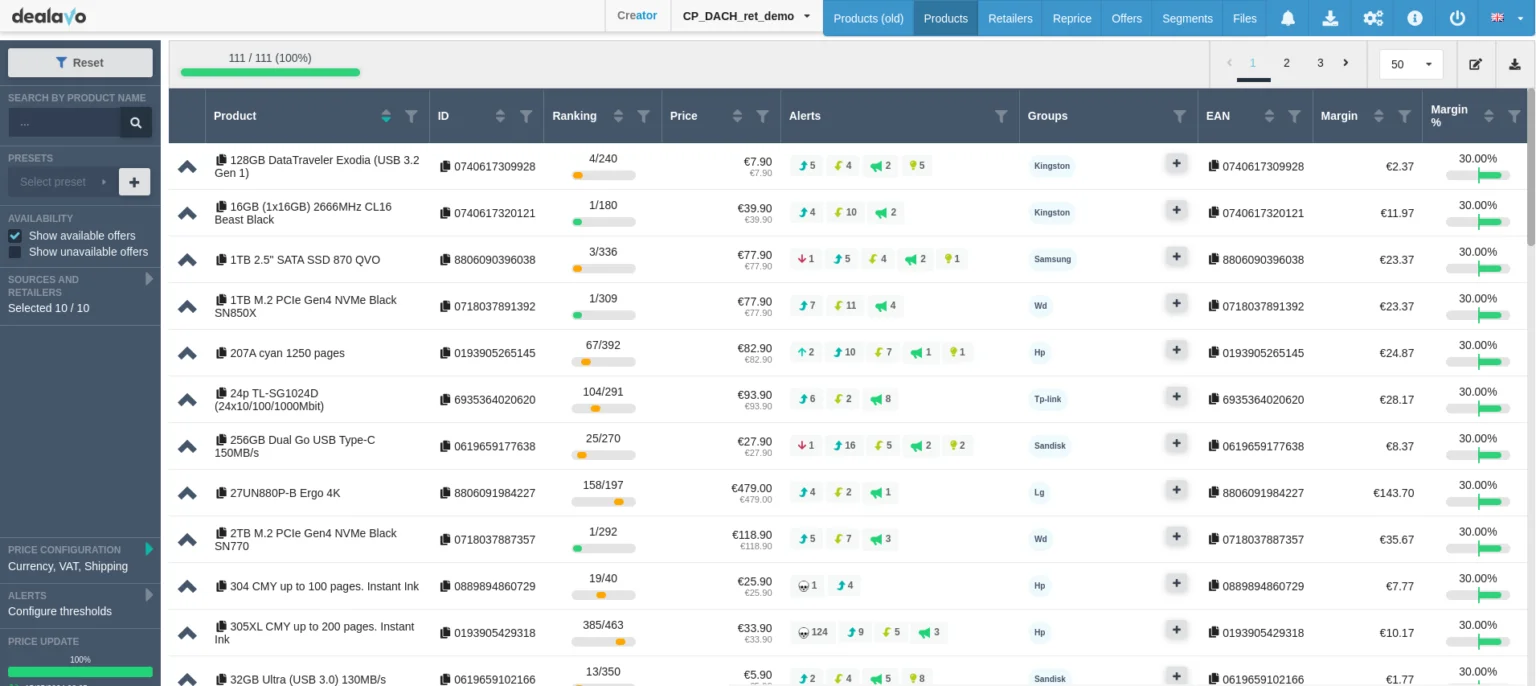
Most price monitoring tools scrape competitor websites and trust the output. Dealavo does it a different way. Its team manually verifies scraping results alongside automated collection, catching the matching errors and data gaps that pure automation misses. If you have ever pulled a report and found prices that did not match what was actually on the competitor’s page, Dealavo’s QA layer is built to prevent that.
It also tracks promotions and banners, which tells you not just what competitors charge but what campaigns they are running and when.
Key features
- Price monitoring across e-shops, marketplaces, and comparison engines
- Dynamic pricing with customisable repricing rules
- Promotion tracking and banner monitoring
- MAP and MSRP monitoring
- API and eCommerce platform connectors
Pros
- Manual QA verification for higher data accuracy
- 7-day free trial
- Strong European marketplace coverage
Cons
- Custom pricing only
- Coverage is strongest in Europe
Pricing
Custom. 7-day free trial available.
8. Pricefy
Best for: Small retailers who need basic competitor monitoring and marketplace tracking without spending much.
Price monitoring approach: Website and marketplace monitoring with Google Shopping integration and a repricing simulator.
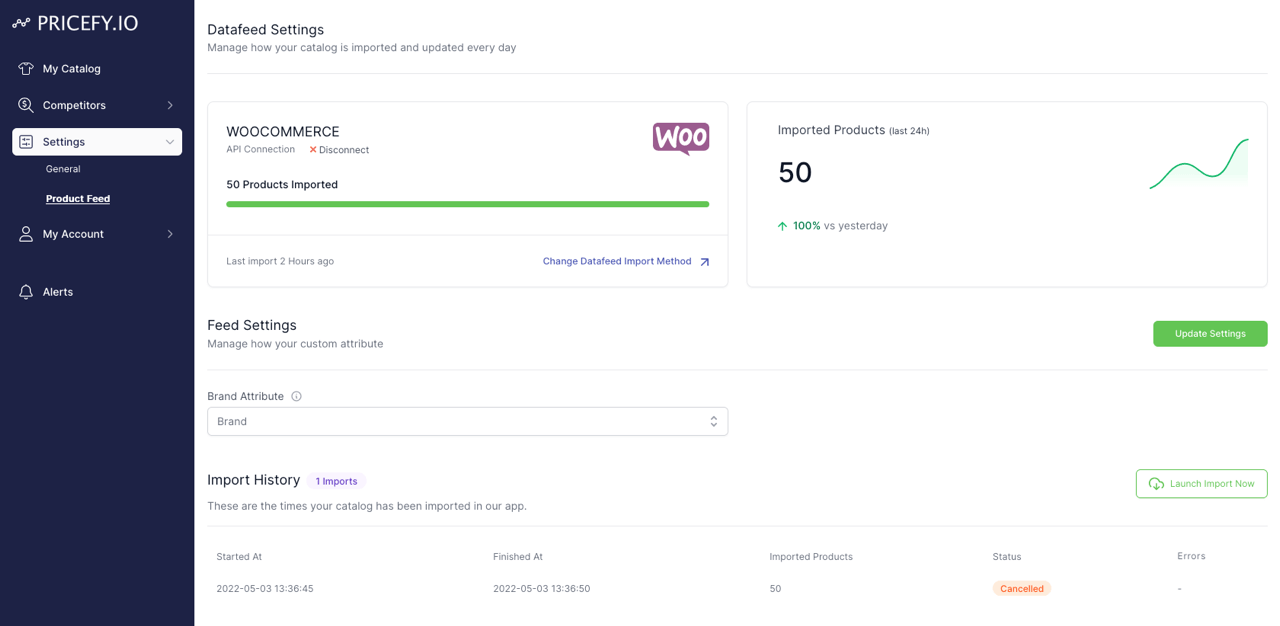
Not every retailer needs a platform that monitors thousands of websites or enforces MAP compliance across tens of countries. Some just need to know what three competitors charge for the same product. Pricefy is built for that use case.
It covers websites, marketplaces, and Google Shopping. The repricing simulator lets you test pricing scenarios before committing to changes. The analytics are basic, and the user base is smaller and fit for lean teams.
Key features
- Competitor tracking across websites and marketplaces
- Google Shopping integration
- Repricing simulator
- Manual and automated product matching
- Price alerts and stock monitoring
Pros
- Free plan covers 50 SKUs
- Marketplace monitoring at base tier
- Clean, simple interface
Cons
- Smaller user base and community
- Advanced analytics less developed
Pricing
Free (50 SKUs), $49/mo (100 SKUs), $99/mo (2,000 SKUs).
9. PriceMole
Best for: Shopify and WooCommerce store owners who want competitor monitoring and repricing built directly into their store.
Price monitoring approach: Native eCommerce platform integration with 4x daily competitor price and stock updates.
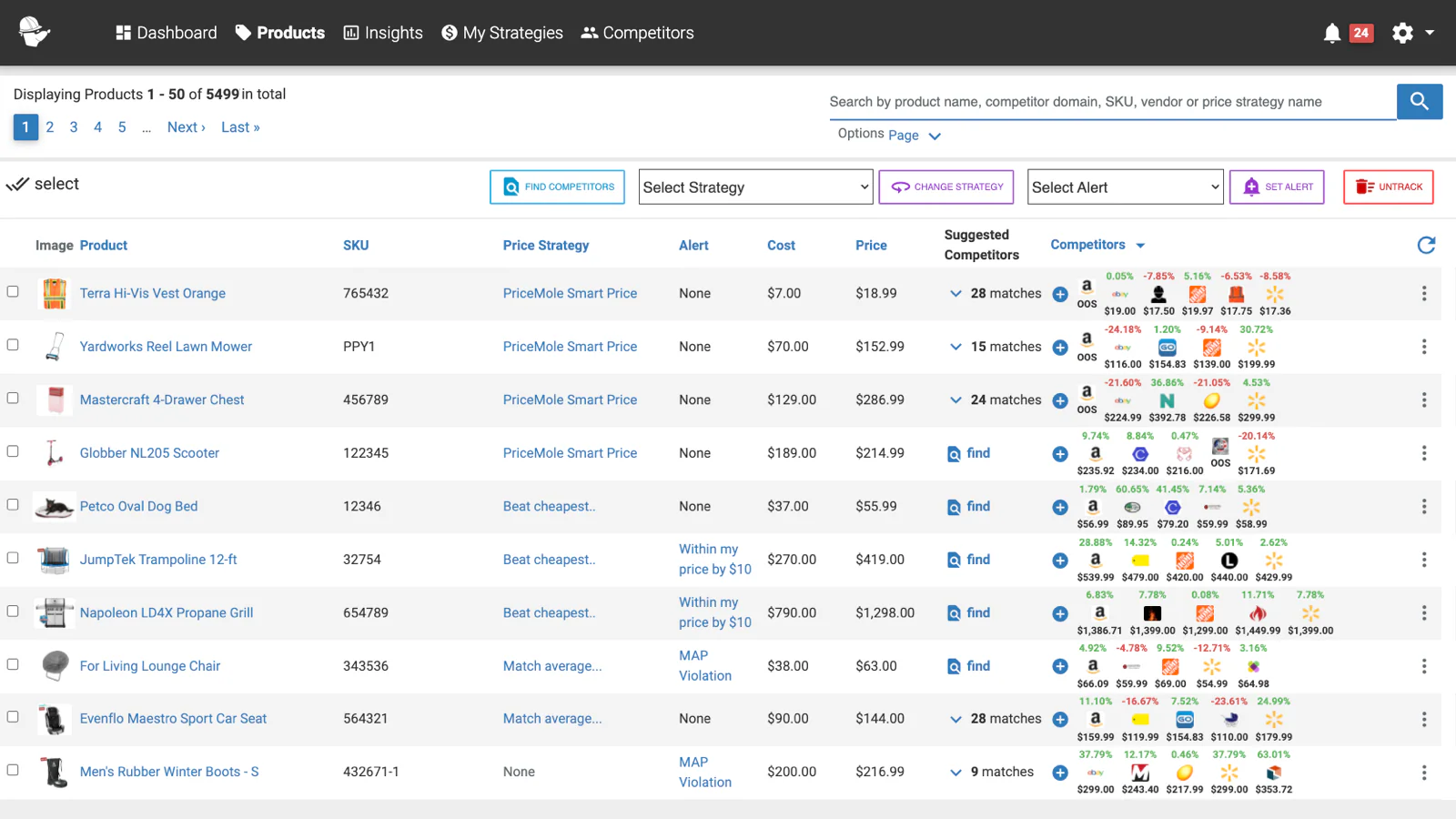
PriceMole lives inside your eCommerce platform rather than running as a separate tool. It automatically imports your products, matches them against competitors using AI, and updates prices 4 times per day.
It also offers a price comparison widget you can embed on your shopfront to show shoppers you are competitively priced. The trade-off is that it is tied to supported platforms, so if you do not sell on Shopify, BigCommerce, or WooCommerce, it is not an option.
Key features
- Native Shopify, BigCommerce, and WooCommerce integration
- AI automatching for competitor products
- Dynamic repricing applied directly to store listings
- Price comparison widget for storefront
- Historical pricing charts and revenue reports
Pros
- No separate tool or login needed
- All-inclusive pricing, no add-ons
- Repricing runs directly in your store
Cons
- Limited to supported eCommerce platforms
- Analytics are basic compared to standalone tools
Pricing
From $99/mo on Shopify. Free trial available.
10. NetRivals (by Lengow)
Best for: Enterprise retailers and brands that need price monitoring at scale across thousands of websites and marketplaces.
Price monitoring approach: AI-powered product matching across 35,000+ websites, marketplaces, and comparison engines, integrated with Lengow’s eCommerce suite.
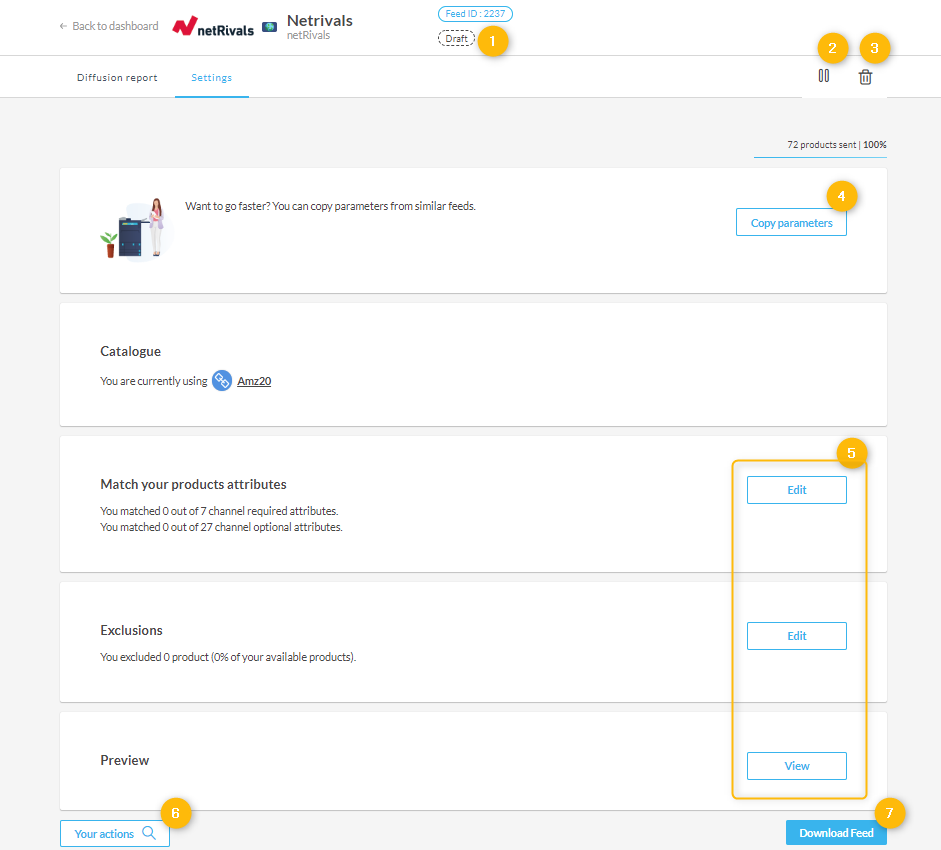
If your competitor list runs into the hundreds and your catalogue spans multiple countries and marketplaces, most monitoring tools start to struggle. NetRivals is built for that scale.
Now part of Lengow’s eCommerce suite, NetRivals connects monitoring data directly to feed management and marketplace distribution. That integration is its real advantage for enterprise teams already using Lengow. The trade-off is that it has custom-only pricing.
Key features
- Monitoring across DTC sites, marketplaces, and comparison engines
- AI product matching by title, image, and attributes
- Dynamic pricing with margin protection rules
- Integration with Lengow's NetAmplify and NetMarkets
- Automated tracking updates across 35,000+ websites
Pros
- Massive website coverage (35,000+)
- AI matching works without shared GTINs
- Connected eCommerce stack through Lengow
Cons
- Custom pricing only
- Best value when paired with other Lengow products
Pricing
Custom only. Contact NetRivals for a demo.
What to look for in a price monitoring tool
When choosing a price monitoring tool, focus on features that will save you time and optimise your workflow. Look for platforms that offer the following:
1. Matching accuracy
The tool needs to connect your products to the right competitor listings. If the matching is wrong, the data is useless. Some tools match by URL, others by GTIN or EAN, and a few use AI to match by title and attributes. The best tools let you review and approve matches rather than blindly trusting automation.
2. Monitoring frequency
Daily updates are the baseline. Some tools check prices multiple times per day. If you sell in a market where competitors frequently change prices, monitoring frequency is a top feature to consider.
3. Quick alerts
A dashboard full of data you never check is not monitoring. The best tools send alerts to your inbox or Slack when something changes, so your team can act without logging into another platform.
4. Transparent pricing
Some tools charge by product count. Others charge by URL, by competitor, or by module. A few publish nothing at all and require a sales conversation. Know how pricing scales before you commit to any tool.
5. Setup speed
If a tool takes weeks to implement, you are paying for a month of monitoring before you see a single competitor price. The best tools get you to live data within a day.
How we selected these tools
We evaluated each tool based on five criteria: monitoring accuracy and frequency, pricing transparency, setup speed, feature depth (matching, alerts, history, and integrations), and feedback from real users across G2, Capterra, and Shopify reviews. We included tools where competitor price tracking is the core job.
Start monitoring competitor prices today
If you want a price monitoring tool you can set up in minutes and start getting competitor data without contracts, add-ons, or a sales conversation, PricingHunter is worth a closer look.
You upload your products, approve the automated competitor matches, and start receiving daily price alerts, including weekends. Every plan includes unlimited competitor tracking, unlimited price history, and product variant monitoring.
Try PricingHunter for free and see how easy competitor price monitoring can be.