



Quick summary
As far as pricing intelligence platforms go, Minderest is one of the most established in the market. It's a solid choice if you want a platform that monitors competitor prices, promotions, catalogue changes, and stock levels across eCommerce sites.
But its lack of public pricing, free trial, and enterprise-leaning setup prompts many teams to explore alternatives. This article compares the 10 best Minderest alternatives in 2026 to help you find the right fit for your workflow and budget. Here are three alternatives worth knowing upfront:
Why listen to us?
At PricingHunter, we built our platform for SME retailers who need competitor price tracking without enterprise complexity or add-on pricing. Every day, we engage with online retailers who are comparing tools, and this guide is based on that experience.
When should teams start looking for Minderest alternatives?
Minderest is often a strong choice for enterprise brands looking to explore AI solutions. But users usually start looking elsewhere when these friction points stack up.
1. You cannot evaluate costs before committing
Minderest has no public pricing and no free trial. You need a sales conversation and a minimum contract in place before you can access the platform with your data. For teams comparing multiple tools, this process can slow everything down.
2. Product matching needs manual correction
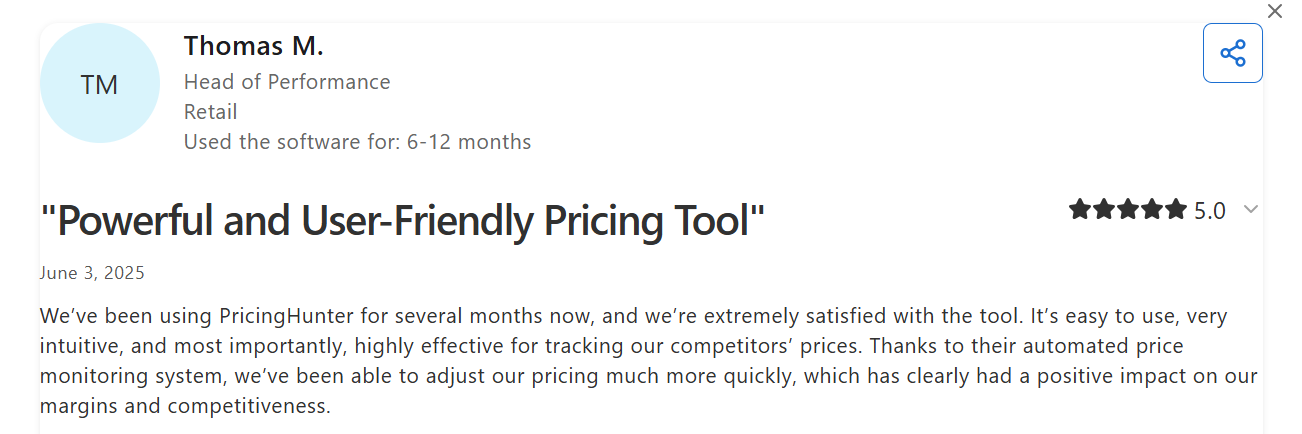
The automated matching is not always accurate out of the box. As one Capterra reviewer noted, “Product matching could be improved in certain situations. Occasionally, matching results are not fully accurate and require manual review.”
3. Setup takes longer than expected
Setting up an enterprise pricing intelligence platform is not a quick process. Matching large product catalogues to competitors, configuring integrations, and building out reporting structures can take weeks. Teams seeking a faster path to live competitor data often seek tools with easy onboarding. One G2 reviewer had this to say: "Complexity at the time of its initial implementation." Smaller teams without dedicated pricing analysts may observe a slower ramp-up.
4. The platform may be more than you need
Minderest serves both brands and retailers, but its strength lies in enterprise-grade features such as MAP enforcement, distribution channel analysis, and offline monitoring. If your core need is straightforward competitor price tracking without the catalogue intelligence layer, the platform can feel heavy for what you are actually using it for.
Top 10 Minderest alternatives
1. PricingHunter
Best for: SME retailers who want affordable, quick competitor price tracking with unlimited competitors, no contracts, and no add-on charges.
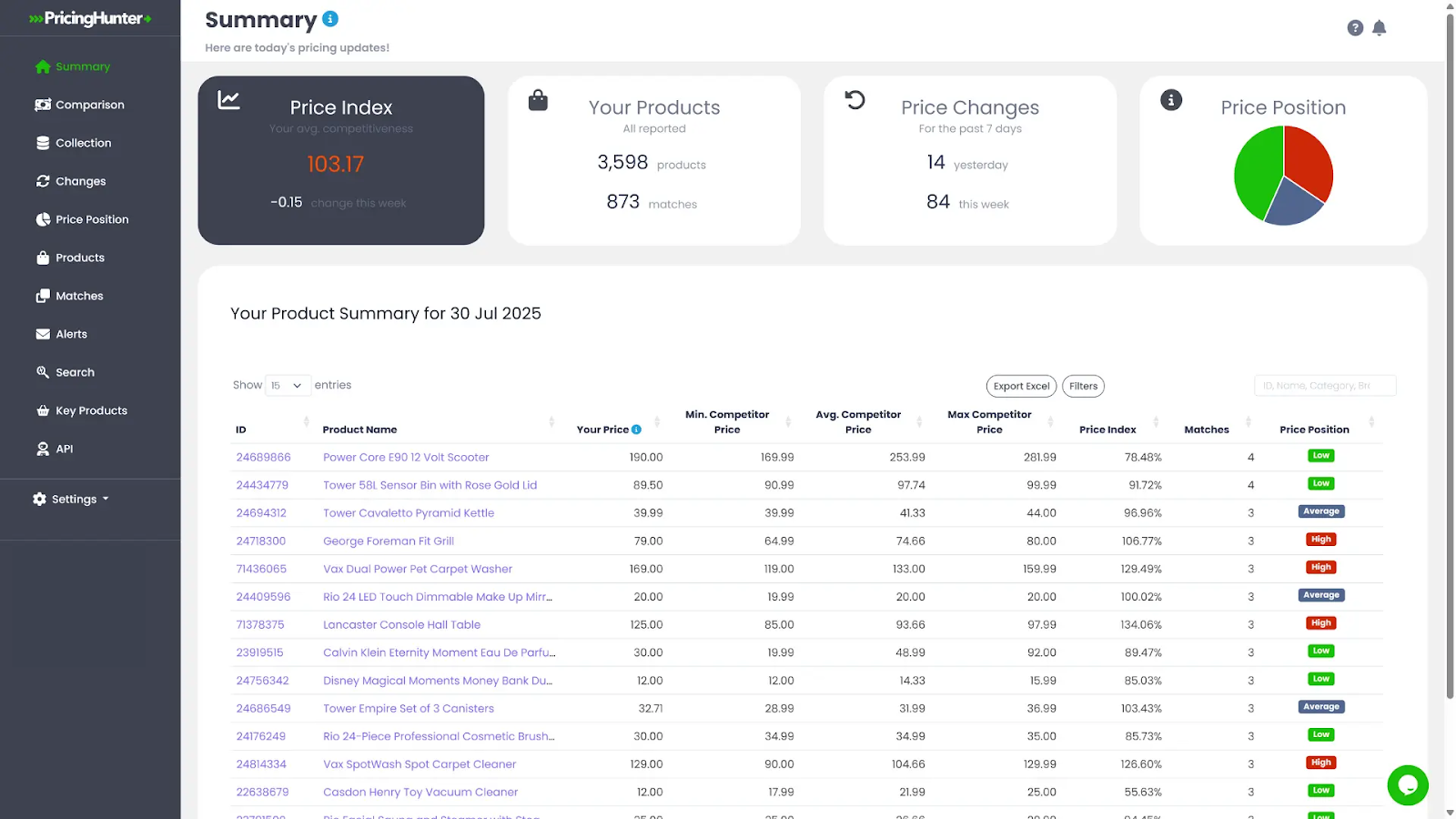
PricingHunter is the strongest alternative for SME retailers who have found Minderest’s enterprise pricing and brand-focused feature set more complex and expensive than they need.
With PricingHunter, you are not configuring catalogue intelligence or setting up MAP enforcement for offline channels. Instead, you are uploading your products, approving automated competitor matches, and getting daily pricing updates that your team can act on immediately.
Where Minderest requires a custom contract before a demo, PricingHunter lets you sign up, upload your products, and start receiving competitor prices the same day. No modules to bolt and no minimum contracts before signing up. You do not need a dedicated pricing analyst, a sales conversation, or a budget for enterprise add-ons to get started.
Every plan includes daily price-change alerts, including weekends, price history with no time limit, and product-variant tracking on professional and premium plans.
Key features
- Unlimited competitor tracking on every plan, so adding new competitors never increases your cost
- Automated product matching that identifies competitors and suggests matches for you to approve in a few clicks
- Daily price change alerts delivered to your inbox every morning, including weekends, so you never miss a competitor move
- Price history with no time limit on stored data, giving you full visibility into how competitors have priced over time
- Product variant tracking that captures pricing across sizes, colours, and configurations on Professional and Premium plans
Pros
- Transparent pricing with no hidden add-ons
- Suitable for SMEs with affordable price monitoring
- Set up in minutes with no technical knowledge required
- Month-to-month flexibility with no contracts
Cons
- No built-in dynamic repricing
Why PricingHunter is a great Minderest alternative
It removes the custom pricing and enterprise setup entirely. Unlimited competitors, matching, alerts, and history are all included from $99/mo with no contracts.
2. Prisync
Best for: eCommerce retailers seeking product-based pricing, dynamic repricing, and Shopify integration.
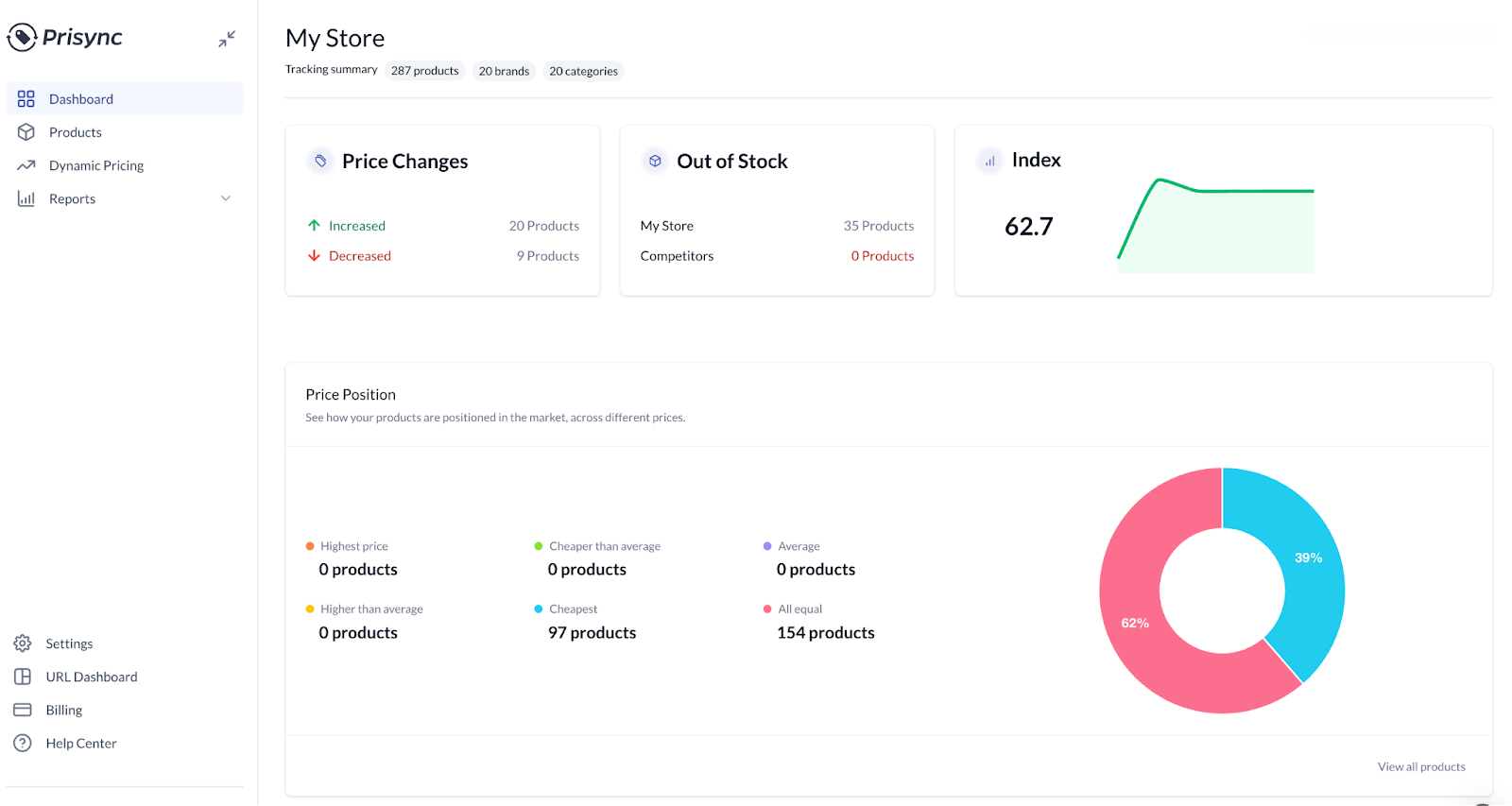
Prisync is one of the most popular Minderest alternatives for retailers who want transparent pricing. It is built around product-based plans rather than custom quotes, which makes budgeting straightforward from day one. Unlike Minderest, which typically requires custom API integration to connect with your store, Prisync has one-click apps for Shopify, Magento, and BigCommerce that sync directly with your store backend.
Key features
- Product-based pricing with unlimited competitors
- Dynamic pricing rules on all plans
- Shopify and Google Shopping one-click integration
- Automated competitor discovery
- Stock availability monitoring
Pros
- Transparent pricing you can evaluate without a sales call
- Dynamic repricing is included natively
- 24/7 customer support
Cons
- API access costs an extra 20%
- Dashboard customisation is limited
Why Prisync is a great Minderest alternative
Transparent, product-based pricing with dynamic repricing included; no custom quote barrier.
3. Price2Spy
Best for: Mid-to-enterprise retailers and brands that need repricing, MAP monitoring, and deep analytics on a single platform.
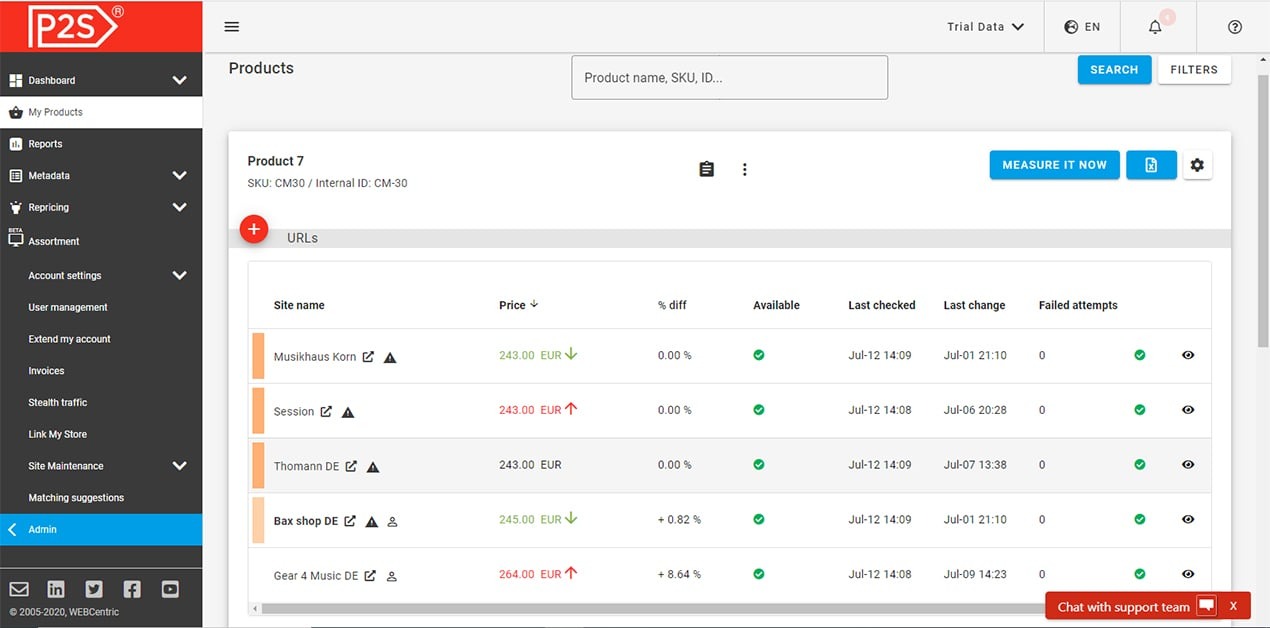
Price2Spy is the closest feature-for-feature alternative to Minderest. It offers MAP monitoring with screenshot evidence, an advanced repricing module, and 25+ built-in reports. Where Minderest focuses on price and product attribute monitoring, it captures stock availability, shipping costs, and promotional offers alongside pricing data.
Key features
- Price monitoring with up to 8 checks per day
- Advanced repricing module with custom strategy rules
- MAP monitoring with screenshot capture
- Automatch for competitor product matching
- 25+ built-in pricing reports
Pros
- Published starting prices, unlike Minderest’s custom-only model
- Covers monitoring, repricing, MAP, and analytics in one platform
- 15-year track record across 40+ countries
Cons
- Add-on costs for repricing, automatch, and extra users stack up
- URL-based pricing can be confusing
Why Price2Spy is a great Minderest alternative
Similar depth in MAP monitoring and repricing with published starting prices, giving teams a clearer cost picture.
4. PriceShape
Best for: Mid-market retailers who want competitor pricing tied to Google Shopping ad performance.
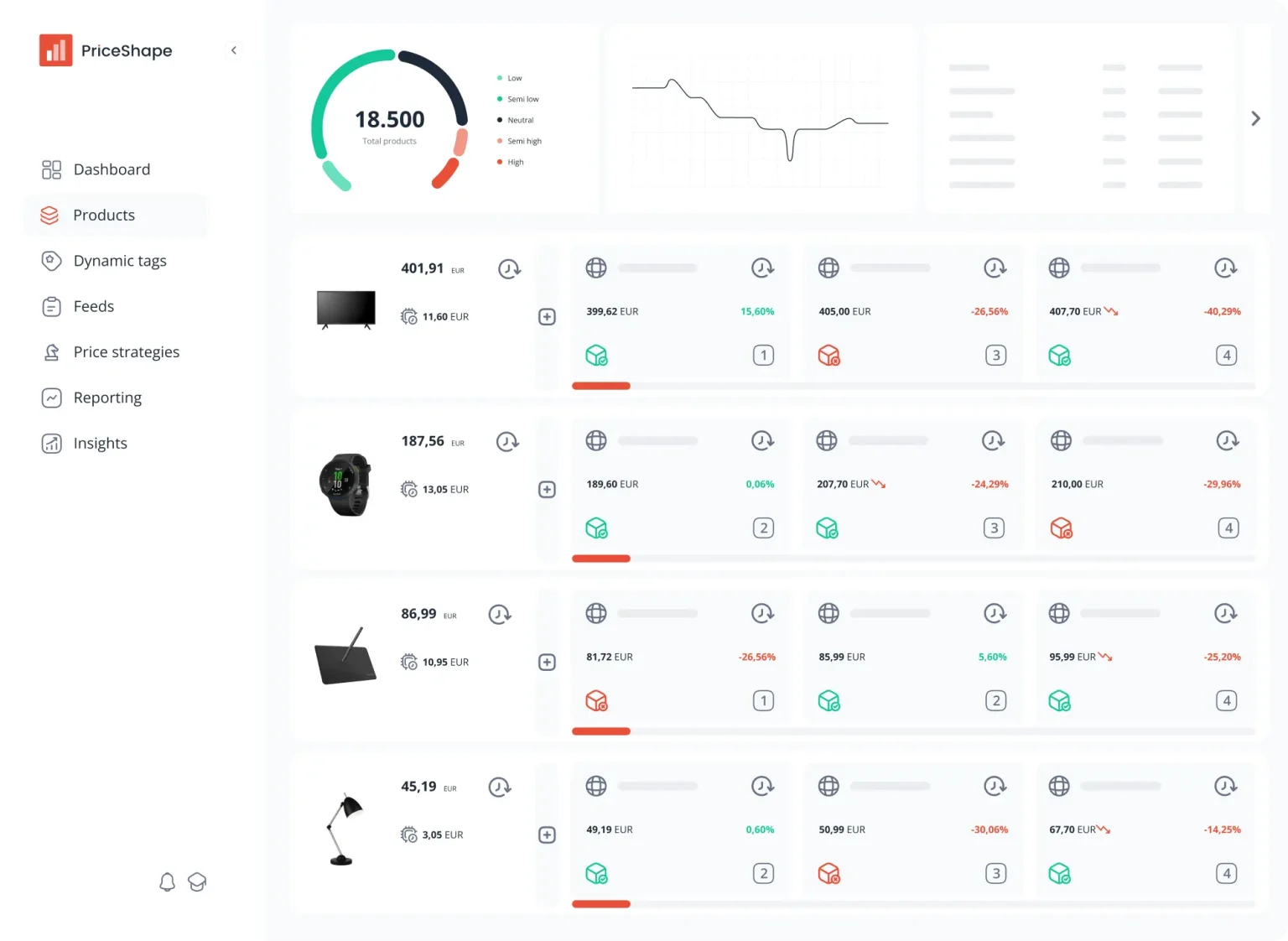
PriceShape connects what competitors charge to where you spend on ads. For retailers already investing in Google Shopping, PriceShape fills a gap that Minderest does not address. Instead of treating price tracking and ad spend as separate decisions, this approach helps you focus your marketing budget on products where you are actually competitive.
Key features
- Real-time monitoring across websites and Google Shopping
- Dynamic pricing rules (cost-plus, competitive matching, second-cheapest)
- Feed editor for Google Shopping campaigns
- Price index scoring
- Dedicated customer success manager
Pros
- Links pricing intelligence directly to ad spend
- Intuitive interface teams adopt quickly
- Structured onboarding with customer success support
Cons
- No publicly listed pricing tiers
- No public API
Why PriceShape is a great Minderest alternative
Ties pricing intelligence to ad spend, a connection Minderest does not offer.
5. Competera
Best for: Large enterprise retailers with dedicated pricing teams and AI-driven strategies.
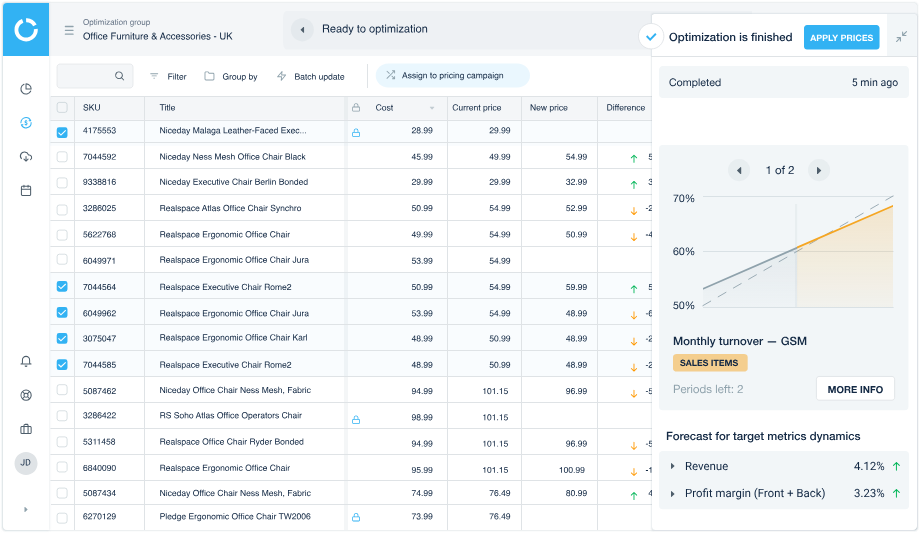
Competera is an AI-powered dynamic pricing platform that uses machine learning to recommend prices based on demand elasticity and market signals rather than rule-based repricing. Its scenario modelling lets pricing teams test strategies before rollout, reducing risk on high-impact decisions.
Key features
- AI price optimisation based on demand elasticity
- Dynamic pricing across product categories
- Scenario modelling before rollout
- Market intelligence and assortment tracking
- Enterprise integrations and dedicated account management
Pros
- Demand-driven optimisation beyond simple rules
- Scenario modelling reduces pricing risk
- Dedicated implementation support
Cons
- Out of reach for SME budgets
- Significant setup time
Why Competera is a great Minderest alternative
Replaces rule-based monitoring with demand-driven AI, a different league for enterprise retailers.
6. Omnia Retail
Best for: Mid-market and enterprise retailers wanting automated dynamic pricing with in-house competitor data and transparent pricing logic.
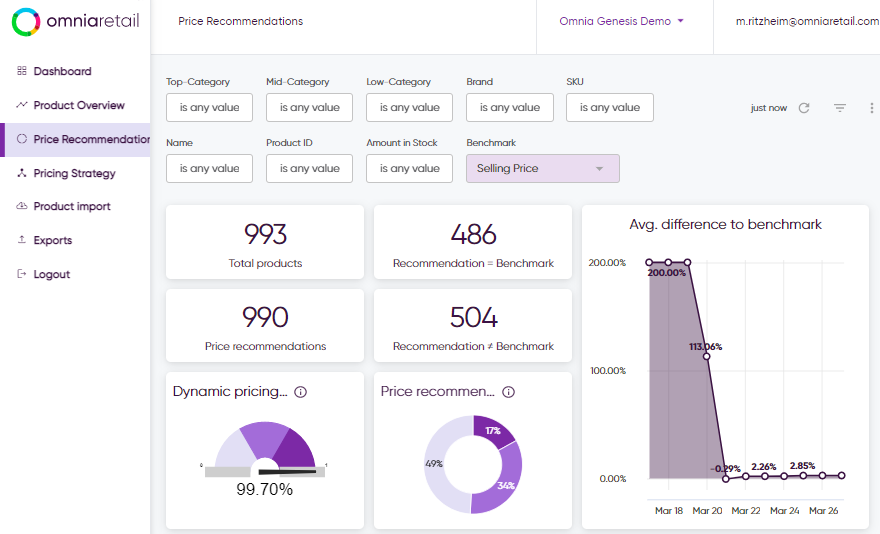
Omnia Retail operates at a different level from Minderest. It takes ordinary pricing data to another level by automating what you do next. Its Pricing Strategy Tree lets teams build, test, and adjust pricing rules visually without IT involvement, and its agentic AI (Omnia Agent) surfaces insights without manual reporting.
Key features
- In-house competitor price scraping across marketplaces, comparison engines, and direct domains
- Pricing Strategy Tree for visual, auditable pricing rules
- Omnia Agent: agentic AI that surfaces pricing insights without manual reporting
- Marketplace coverage including Amazon, eBay, Google Shopping, Idealo, and Bol.com
- Enterprise integrations via API, Shopware, PlentyMarkets, and JTL
Pros
- Transparent, auditable pricing logic your team can govern
- In-house data collection for higher accuracy and data ownership
- Scales from thousands to millions of SKUs
Cons
- Custom pricing only; requires a demo conversation
- Enterprise-grade complexity may be more than smaller teams need
Why Omnia Retail is a great Minderest alternative
It replaces Minderest’s monitor-and-report model with an integrated platform where competitor data, dynamic pricing, and AI insights work together natively.
7. Priceva
Best for: Mid-size retailers wanting monitoring and repricing without paying for add-ons.
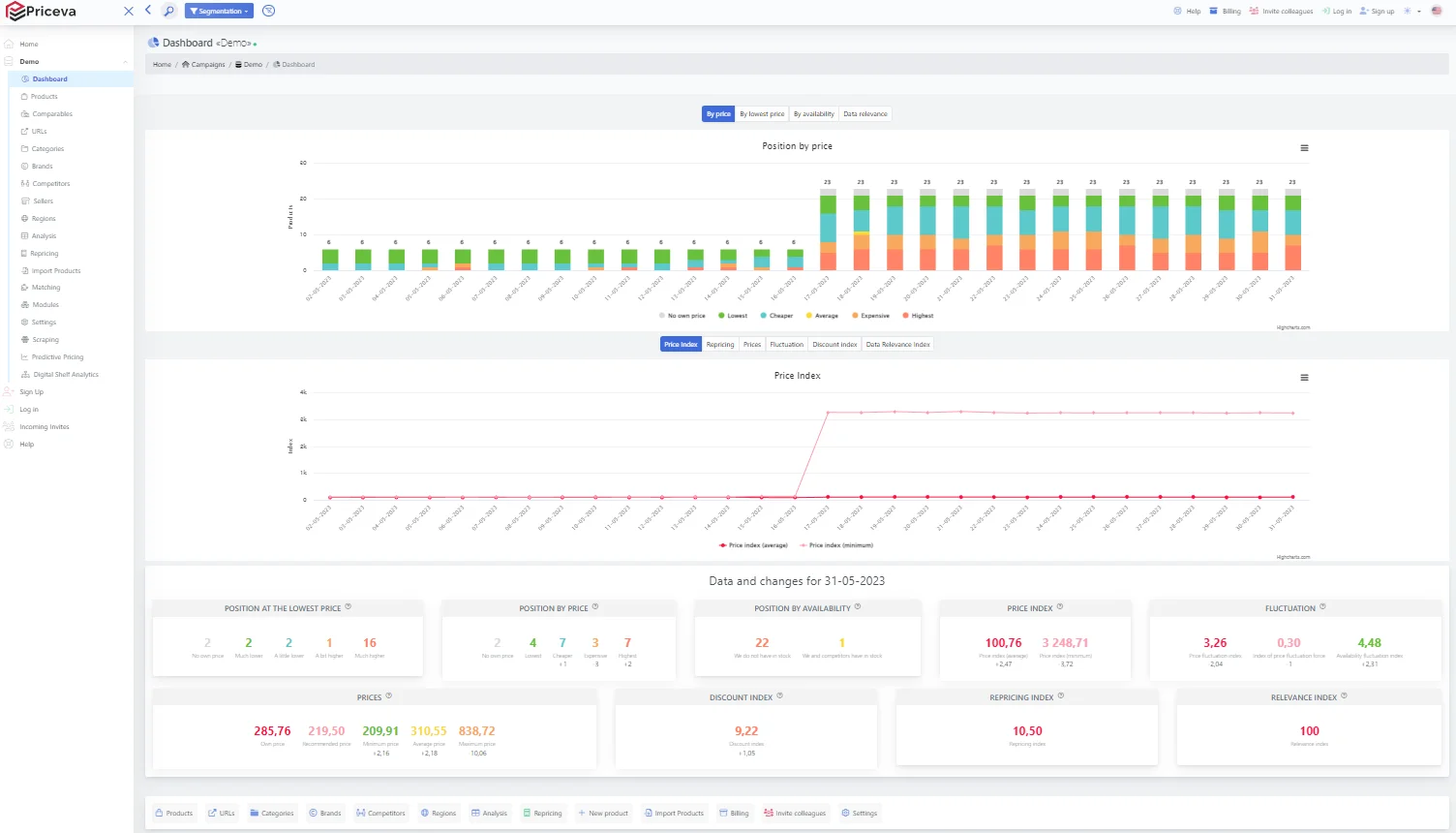
Priceva is a competitor monitoring tool that includes automated repricing in every paid plan, with MAP monitoring and multi-format data export as standard. It directly addresses Minderest’s lack of a free tier. Every paid plan includes repricing and MAP monitoring.
Key features
- Competitor price and stock monitoring
- Automated repricing with user-defined formulas
- MAP monitoring with page screenshots
- Historical price analysis
- API and multi-format data export
Pros
- Repricing included, not charged separately
- Free starter tier for testing 20 products
- MAP monitoring with compliance proof
Cons
- Data accuracy can vary by source
- The interface is functional but outdated
Why Priceva is a great Minderest alternative
Repricing and MAP come standard with a free tier to test first, removing the blind commitment Minderest’s custom-only model requires.
8. Pricefy
Best for: Small retailers looking for budget-friendly monitoring with marketplace coverage.
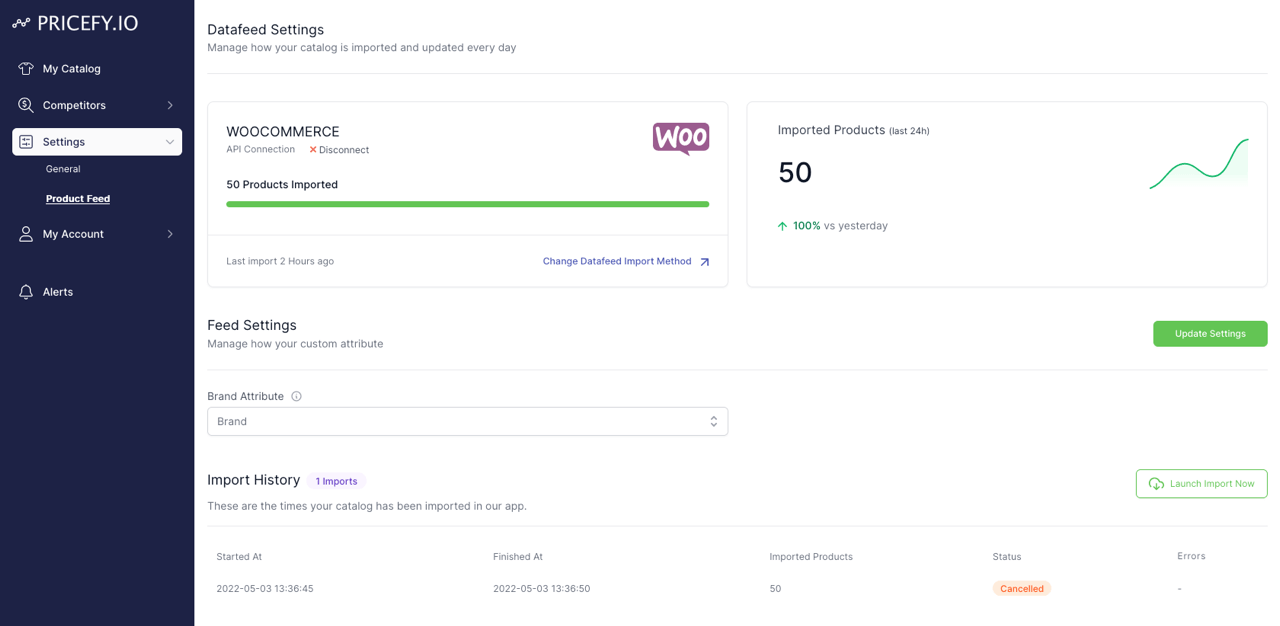
Pricefy is a budget-friendly price-monitoring tool for small- and mid-size retailers who want marketplace analysis and automated product matching without enterprise pricing. For small retailers whose core need is to know what competitors charge, rather than managing distributor networks or catalogue intelligence, Pricefy covers the essentials without the overhead.
Key features
- Competitor tracking across websites and marketplaces
- Google Shopping integration
- Repricing simulator
- Manual and automated product matching
- Price alerts and stock monitoring
Pros
- The free plan covers 50 SKUs
- Marketplace monitoring at base tier
- Clean, easy-to-navigate interface
Cons
- Smaller user base
- Advanced analytics less developed
Why Pricefy is a great Minderest alternative
Marketplace analysis and repricing simulator at a fraction of Minderest’s cost, without enterprise contracts.
9. Wiser
Best for: Enterprise brands and retailers needing MAP compliance monitoring alongside multi-channel pricing intelligence.
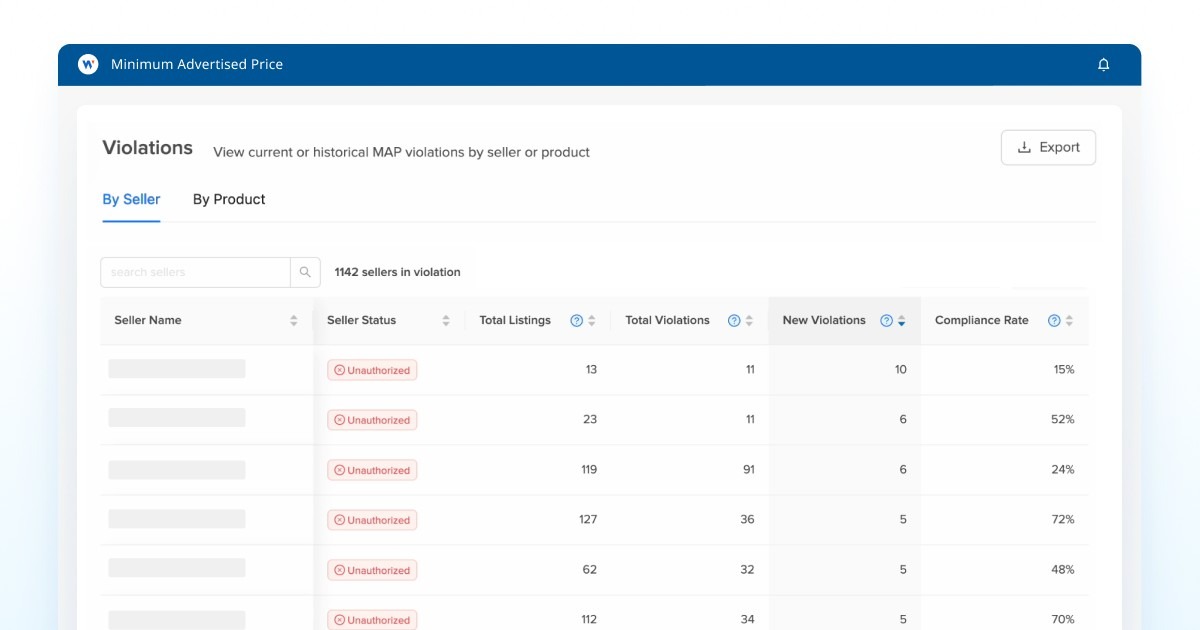
Wiser is the most direct enterprise-grade alternative to Minderest on this list. Both platforms cover pricing intelligence and MAP monitoring. The difference is what comes after: Wiser extends into retail execution with in-store shelf auditing, merchandising compliance checks, and physical store analytics. For brands that need to know not just how their products are priced online but how they appear on physical shelves, Wiser covers ground Minderest does not.
Key features
- Multi-channel competitor price monitoring across websites and marketplaces
- MAP compliance monitoring and enforcement
- Retail execution and in-store shelf auditing
- Market Price Index for competitive positioning
- Custom data delivery via API and webhooks
Pros
- Combines pricing intelligence with retail execution
- 800+ brands and retailers trust the platform
- Strong MAP compliance capabilities
Cons
- Custom pricing only
- Interface navigation flagged as complex in some reviews
Why Wiser is a great Minderest alternative
Extends beyond price monitoring into retail execution and shelf intelligence, giving brands a broader view than Minderest provides.
10. Dealavo
Best for: European retailers and brands wanting high data accuracy with dynamic pricing and promotion tracking.
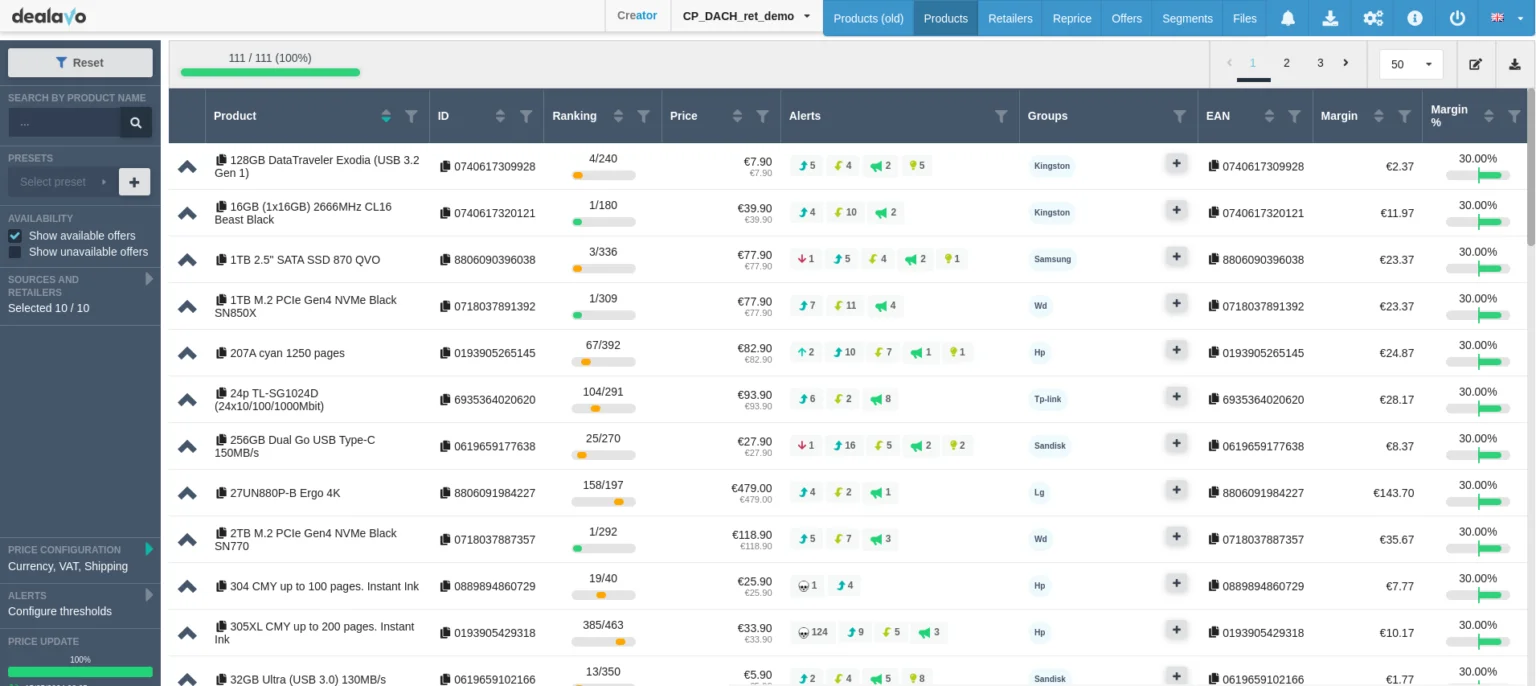
Dealavo competes directly with Minderest in European markets. While most tools rely entirely on automated scraping, Dealavo adds a manual QA verification layer in which its team checks the scraping results for accuracy. This reduces the matching errors and data inconsistencies that some Minderest users report in reviews. It offers a 7-day free trial, which Minderest does not.
Key features
- Price monitoring across e-shops, marketplaces, and comparison engines
- Dynamic pricing with customisable repricing rules
- Promotion tracking and banner monitoring
- MAP and MSRP monitoring for brands
- API integration and eCommerce platform connectors
Pros
- High data accuracy with manual QA verification
- 7-day free trial to test before committing
- Strong European marketplace coverage
Cons
- Custom pricing (no published plans)
- Strongest in European markets, with less coverage elsewhere
Why Dealavo is a great Minderest alternative
It matches Minderest’s European coverage, offers higher data-accuracy verification, and provides a free trial to test first.
How to choose the right Minderest alternative
- Start by clarifying whether you need brand-side distributor monitoring or retailer-side competitor tracking.
- Check if you can commit to custom pricing without a free trial.
- Factor in how quickly your team needs live data, whether MAP enforcement is essential or optional, and whether your budget supports an enterprise setup or a leaner one.
Choose the best Minderest alternative for your team
When comparing Minderest alternatives, focus on the metrics that matter most to your pricing team: total cost of ownership, setup speed, how pricing scales with your catalogue size, and whether core features like matching and alerts are included or come at an extra cost.
If you want something simpler than an enterprise pricing intelligence platform, a tool you can set up in minutes and start getting competitor data from without negotiating custom contracts, PricingHunter is worth a closer look.
Try PricingHunter for free and see how easy it is to track competitor prices without the enterprise complexity.