



Quick summary
Prisync and Omnia Retail both track competitor prices, but they serve very different teams. Prisync targets SME retailers who want fast product-level tracking and Shopify integration. Omnia Retail targets mid-market and enterprise retailers needing automated pricing execution across Amazon, eBay, and Google Shopping.
So which one fits your strategy?
This guide breaks down the key differences, and why PricingHunter, with its real-time alerts, SME-friendly pricing, and no-code setup, might be the better fit.
Why listen to us?
PricingHunter works exclusively with competitor pricing data. The team speaks with online retailers every day about pricing workflows, implementation timelines, and total cost of ownership. This comparison focuses on practical usage, real setup effort, and long-term scalability rather than vendor marketing claims.
Prisync vs Omnia Retail: Key differences
Prisync starts with product-based competitor tracking, while Omnia Retail starts with automated dynamic pricing.
Prisync is built around tracking competitor prices at the product level. You upload products, match competitor URLs, and immediately see price movements inside a dashboard.
Omnia Retail approaches pricing from the opposite direction. The platform assumes pricing automation is the starting point. Competitor data feeds directly into the Pricing Strategy Tree, a visual rule engine where pricing logic is tested.
In practice, Prisync gives you visibility. Omnia Retail gives you automation. If your team still wants to review data before acting, Prisync is the more natural fit. Omnia Retail is designed for those who want pricing to run on autopilot across thousands of SKUs.
Prisync offers transparent per-product pricing, while Omnia Retail uses custom enterprise quotes.
Prisync publishes pricing openly. Plans start at $99 per month for 100 products, scale to $199 per month for 1,000 products. Unlimited competitors are included across all plans. API access is available, but it costs an extra 20% on top of your monthly subscription fee.
Omnia Retail does not publish pricing publicly. Costs are determined through a sales conversation and depend on business requirements. This is standard for enterprise software, but it means you cannot run a quick budget comparison without booking a call.
For buyers comparing tools, the impact is immediate. Prisync enables fast, seamless budgeting and self-service onboarding. With Omnia Retail, you need to invest time in a discovery process before you know whether it fits your budget.
Prisync focuses on e-commerce retailers, while Omnia Retail covers retailers and brands across channels.
Prisync is primarily targeted towards online retailers. Its Shopify and Google Shopping integrations send the clearest signals because they are built for store owners who want competitor data without heavy setup.
Omnia Retail operates across a broader retail ecosystem. The platform supports eCommerce retailers, direct-to-consumer brands, and omnichannel organisations across many industries. It covers marketplace channels, including Amazon, eBay, Google Shopping, Idealo, Bol.com, and thousands of additional domains, and collects all of that data in-house rather than relying on third-party providers.
If your pricing strategy depends on marketplace data or spans multiple channels, Omnia Retail is the more capable option. If you sell primarily through your own store, Prisync covers the core use case well.
What is Prisync?
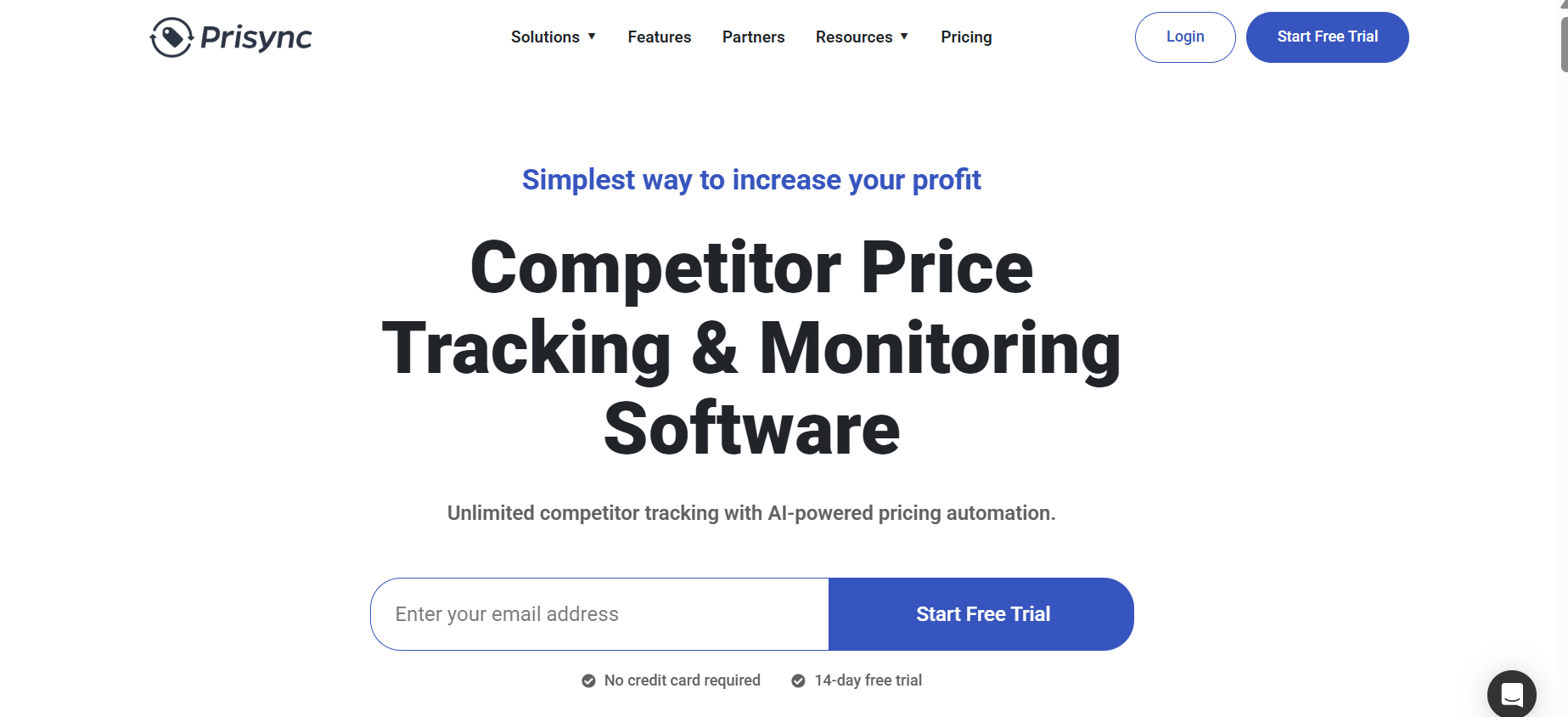
Prisync is a competitor price tracking and dynamic pricing tool for online retailers. Instead of trying to be a full pricing intelligence suite, Prisync focuses on one core workflow: showing you what Competitors charge you and allow you to respond with automated repricing rules. You upload your products, the platform matches them to competitor listings, and you see price movements inside a clean dashboard.
When prices change, you can set rules that adjust your prices automatically based on targets you define. What distinguishes Prisync is its transparent product-based pricing model combined with unlimited competitor tracking. The dashboard is clean and easy to navigate, onboarding is quick, and 24/7 support is available.
Key features
- Competitor price tracking: Monitor prices across unlimited competitor websites per product.
- Dynamic pricing automation: Set automated repricing logic to match, beat, or maintain margin targets.
- Stock availability monitoring: Track when competitors go out of stock to capture pricing opportunities.
- Shopify and Google Shopping integrations: One-click product import with automated competitor discovery.
- Daily reporting dashboard: View historical price changes and receive notifications when competitors reprice.
Pros
- Transparent pricing is published publicly with no hidden fees.
- Unlimited competitor tracking is included on all plans.
- Fast setup with a 14-day free trial and no credit card required.
Cons
- API access is charged separately at 20% above the monthly fee.
- Dashboard customisation is limited compared to enterprise tools.
- No built-in MAP monitoring or marketplace depth beyond Google Shopping.
Prisync pricing
No free plan is available. There are three tiered paid plans, and all come with a 14-day free trial that requires no credit card.
- Professional ($99/mo): Up to 100 products, unlimited competitor tracking, dynamic pricing rules, stock availability monitoring, Shopify and Google Shopping integrations, a daily reporting dashboard, and 24/7 customer support.
- Premium ($199/mo): Up to 1,000 products, everything in Professional, plus marketplace price tracking and enhanced reporting.
- Platinum ($399/mo): Up to 5,000 products, everything in Premium plus priority support and higher data refresh frequency.
API access is available on any plan but costs an additional 20% on top of the monthly fee.
What is Omnia Retail?
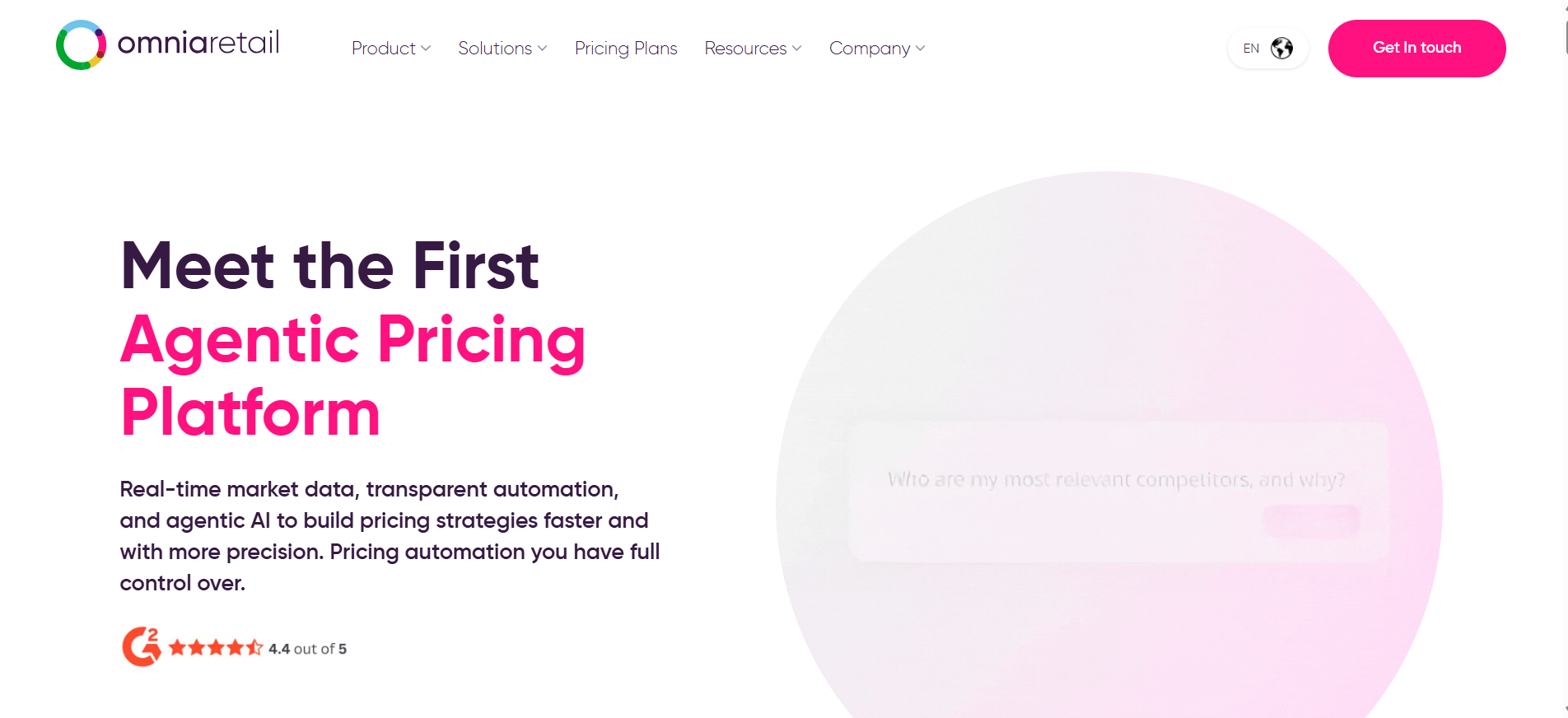
Omnia Retail is a dynamic pricing automation and competitor monitoring platform for retailers and brands. It was built for pricing teams that need more than dashboards and reports.
Where most pricing tools stop at showing you what competitors charge, Omnia Retail goes further. It combines competitor monitoring, automated dynamic pricing, and marketplace intelligence into one enterprise system.
Competitor data feeds directly into the Pricing Strategy Tree, a visual rule-building environment where pricing teams define, test, and refine automated strategies without writing code.
The platform covers the full pricing workflow enterprise retailers need. It monitors pricing across Amazon, eBay, Google Shopping, Idealo, and Bol.com. It delivers AI-driven insights through Omnia Agent, an agentic AI layer that surfaces pricing opportunities without requiring manual dashboard analysis. It integrates with Shopware, PlentyMarkets, JTL, and custom API connections for large-scale operations.
Key features
- Pricing Strategy Tree: A visual rule builder for defining, testing, and automating pricing strategies.
- In-house competitor data collection: Direct scraping across 35,000+ competitor domains, marketplaces, and comparison shopping engines.
- Omnia Agent: Agentic AI that analyses pricing data and delivers proactive insights without manual reporting.
- Marketplace coverage: Amazon, eBay, Google Shopping, Idealo, and Bol.com.
- Enterprise integrations: Shopware, PlentyMarkets, JTL, and custom API connections for large-scale operations.
Pros
- Most advanced dynamic pricing logic available for retail teams.
- In-house competitor data collection removes dependency on third-party scrapers.
- Marketplace coverage spans the major European and global platforms.
Cons
- No published pricing. You need a sales conversation before you can assess fit.
- Implementation time and complexity are significant compared to lighter tools.
- Better suited to teams with pricing expertise than solo operators or small stores.
Omnia Retail pricing
Omnia Retail does not publish pricing. Costs are determined through a sales conversation and depend on your business needs and level of implementation support. Pricing typically reflects enterprise-grade deployment, including onboarding, strategy configuration, and ongoing customer success management. Implementation timelines range from days to weeks, depending on the complexity of the catalogue and integration needs.
Best alternative to Prisync and Omnia Retail: PricingHunter
Best for: SME retailers who want serious competitor price tracking with transparent pricing, fast setup, and no contracts or add-on costs.
Prisync and Omnia Retail sit at opposite ends of the same problem. Prisync offers affordable competitor visibility but caps your product count. Omnia Retail gives you enterprise-grade automation but requires custom pricing, a sales process, and weeks of implementation before you see value. Most SME retailers fall somewhere in between and struggle to find a tool that covers the core job without trade-offs.
PricingHunter is a competitor price-tracking platform that combines three features: automated product matching, daily price alerts, and unlimited competitor tracking. Each is included on every plan, and all three work together from the moment you sign up. PricingHunter keeps your pricing data, alerts, and history together in one transparent package.
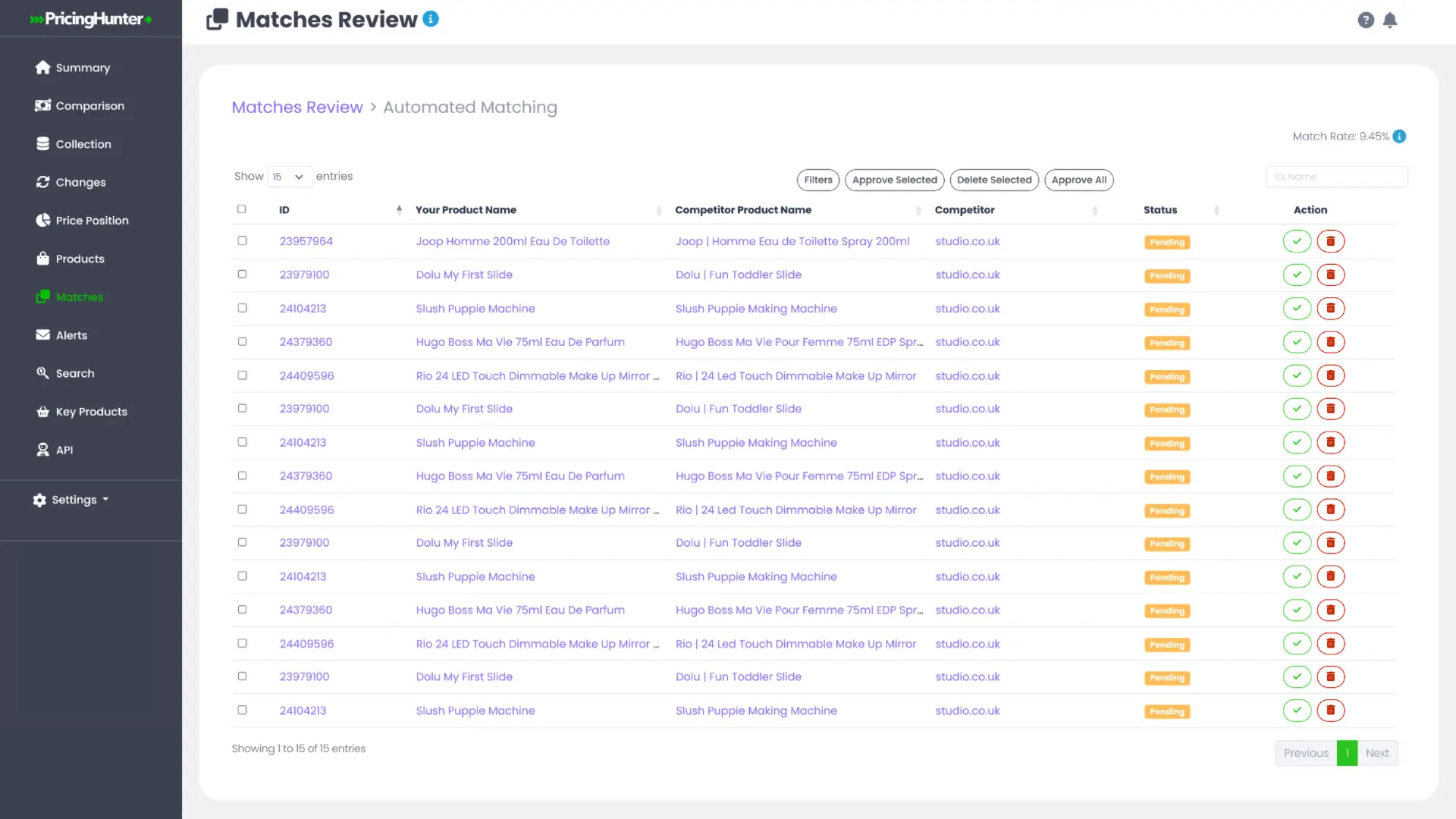
Getting started is quick. Upload your products, and the platform identifies competitors and suggests matches for you to approve in a few clicks. Live competitor data from day one, including weekends.
For historical analysis, PricingHunter stores your full price history with no time limit. Track how competitors have priced over weeks, months, or years without losing data or hitting a storage cap. Product variant tracking on Professional and Premium plans captures pricing across sizes, colours, and configurations.
Key features
- Unlimited competitor tracking on every plan, so adding new competitors never increases your cost. Prisync includes unlimited competitors, too, but caps products at 100 on the entry tier. PricingHunter starts at 200.
- Automated product matching that identifies competitors and suggests matches for you to approve in a few clicks. No manual URL matching required.
- Daily price change alerts delivered to your inbox every morning, including weekends. Most tools either skip weekends or require you to log into a dashboard to check.
- Price history with no time limit on stored data, giving you full visibility into how competitors have priced over months or years.
- Product variant tracking that captures pricing across sizes, colours, and configurations on Professional and Premium plans.
Pros
- More products per plan than Prisync at every price point: 200 vs 100 at $99/mo, 2,000 vs 1,000 at $199/mo, 6,000 vs 5,000 at $399/mo.
- No add-ons, no contracts, no hidden upgrades. Everything is included from day one.
- Setup takes minutes, not the days or weeks Omnia Retail's implementation requires.
Cons
- No built-in dynamic repricing engine like Omnia Retail's Pricing Strategy Tree.
- Does not yet cover marketplace channels like Amazon or Idealo in depth.
PricingHunter Pricing
No free plan is available. There are three paid plans, and all come with a 14-day free trial that requires no credit card. No contracts on any tier.
- Essential ($99/mo): 200 products, unlimited competitors, automated product matching, daily price alerts, including weekends, full price history, and 3 users.
- Professional ($199/mo): 2,000 products, everything in Essential plus product variant tracking, and unlimited users.
- Premium ($399/mo): 6,000 products, everything in Professional, plus unlimited users and priority support.
- All plans include unlimited competitors and a 14-day free trial without a credit card.
Prisync vs Omnia Retail vs PricingHunter: Feature comparison at glance
Why do retailers choose PricingHunter?
- More products per plan at the same price: At $99/mo, PricingHunter tracks 200 products. Prisync tracks 100. At $199/mo, PricingHunter covers 2,000 products, compared to Prisync's 1,000. PricingHunter, at $399/mo, covers 6,000, while Prisync covers only 5,000. At every tier, you get more tracking capacity for the same spend.
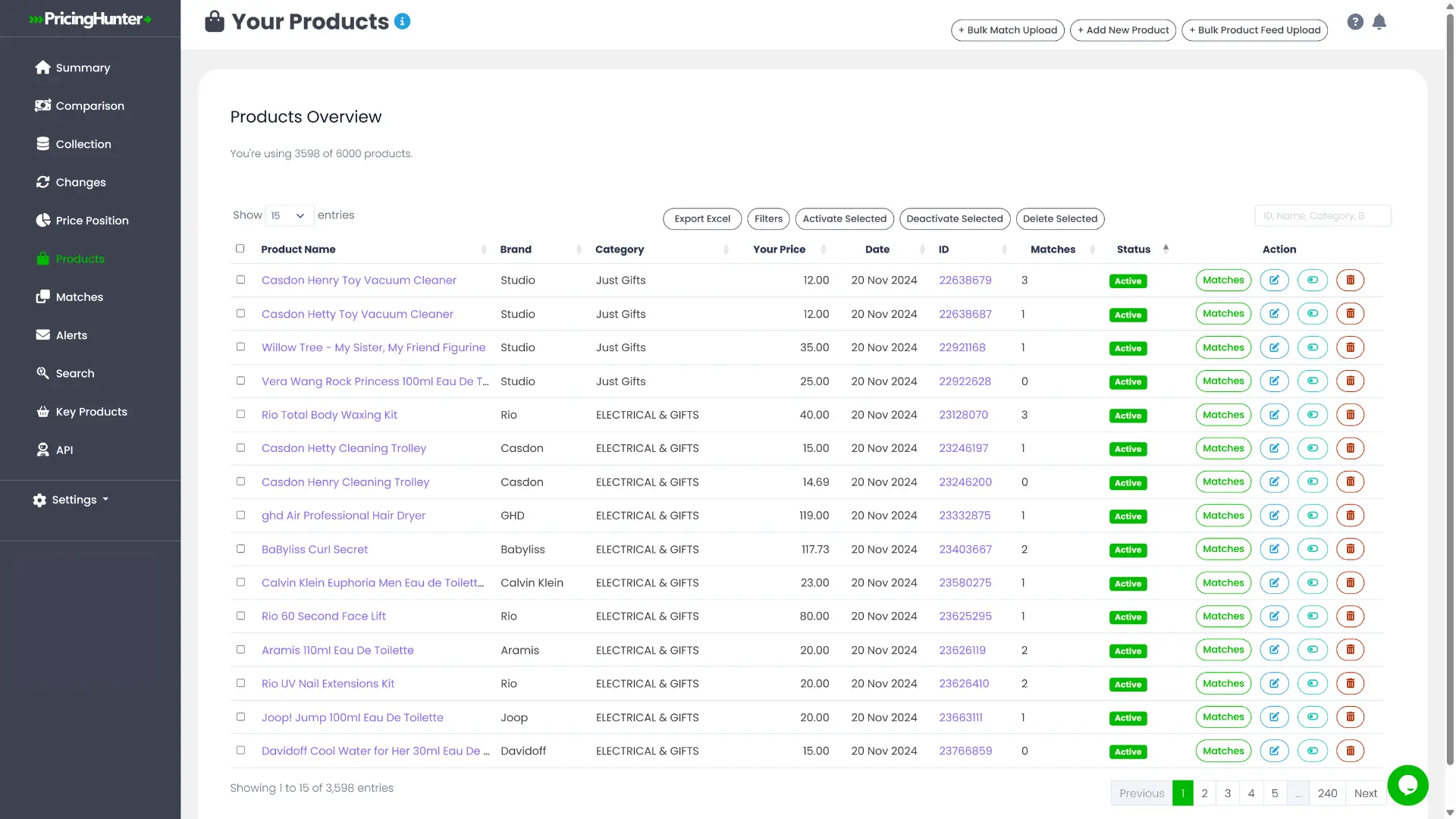
- Every feature included from day one: Omnia Retail requires a sales conversation before you see any numbers. PricingHunter publishes its plans and does not charge extra for features most retailers use every day. You know what you are paying before you sign up.
- Set up in minutes, not days or weeks: Omnia Retail’s implementation can take days to weeks, particularly for retailers with complex catalogues. Prisync is faster but still requires manual URL matching for some competitors. PricingHunter reduces onboarding to minutes through automated product matching.
- Unlimited competitors on every plan: When competitor counts are capped, or feel capped because product limits reduce how many you can track effectively, teams prune their tracking lists rather than expand them. PricingHunter places no limit on the number of competitors per product on any plan.
- Daily alerts, including weekends: Competitors continue repricing on Saturdays. PricingHunter sends price change alerts to your inbox every morning, seven days a week. Most tools either skip weekends or require you to log into a dashboard to check manually.
- Price history with no time limit: Some tools cap how far back you can view historical pricing data. PricingHunter stores your full price history with no expiration, so you can track competitor pricing patterns across months or years without losing data.
Choose the right competitor pricing tool for your team
When you are comparing pricing tools, focus on the total cost of ownership rather than the headline price. Factor in what is included in the base plan, what triggers additional charges, and how long setup take. A tool with a lower starting price can end up costing more in practice.
If you want something simpler than Prisync’s monitoring-first limitations and add-on structure and less complex than Omnia Retail’s enterprise ecosystem, PricingHunter is worth a closer look. It covers the core use cases: competitor tracking, automated matching, daily alerts, and price history, all without the cost surprises.
Try PricingHunter for free and start tracking competitor prices without the hidden costs.