



If you are an e-commerce retailer, you already know that manually tracking competitors’ prices does not scale.
On busy days, you risk wasting time comparing dozens of competitors across hundreds of products when you should be doing something else.
Web price scraping tools help you extract pricing data from competitor sites, match it to your catalogue, and deliver it in a format you can act on. Some stop at raw data. Others handle the matching, alerting, and even repricing for you. This guide covers ten tools across that range.
Why listen to us?
PricingHunter scrapes competitor pricing data for e-commerce retailers every day. We understand what breaks down in scraping pipelines because our platform solves those problems for hundreds of catalogues, which is why we are writing this piece to help you make informed decisions.

10 best web price scraping tools compared
1. PricingHunter
Best for: SME retailers who want turnkey price scraping without having to manage infrastructure.
Scraping approach: Automated product matching with daily scraping across unlimited competitor sites.
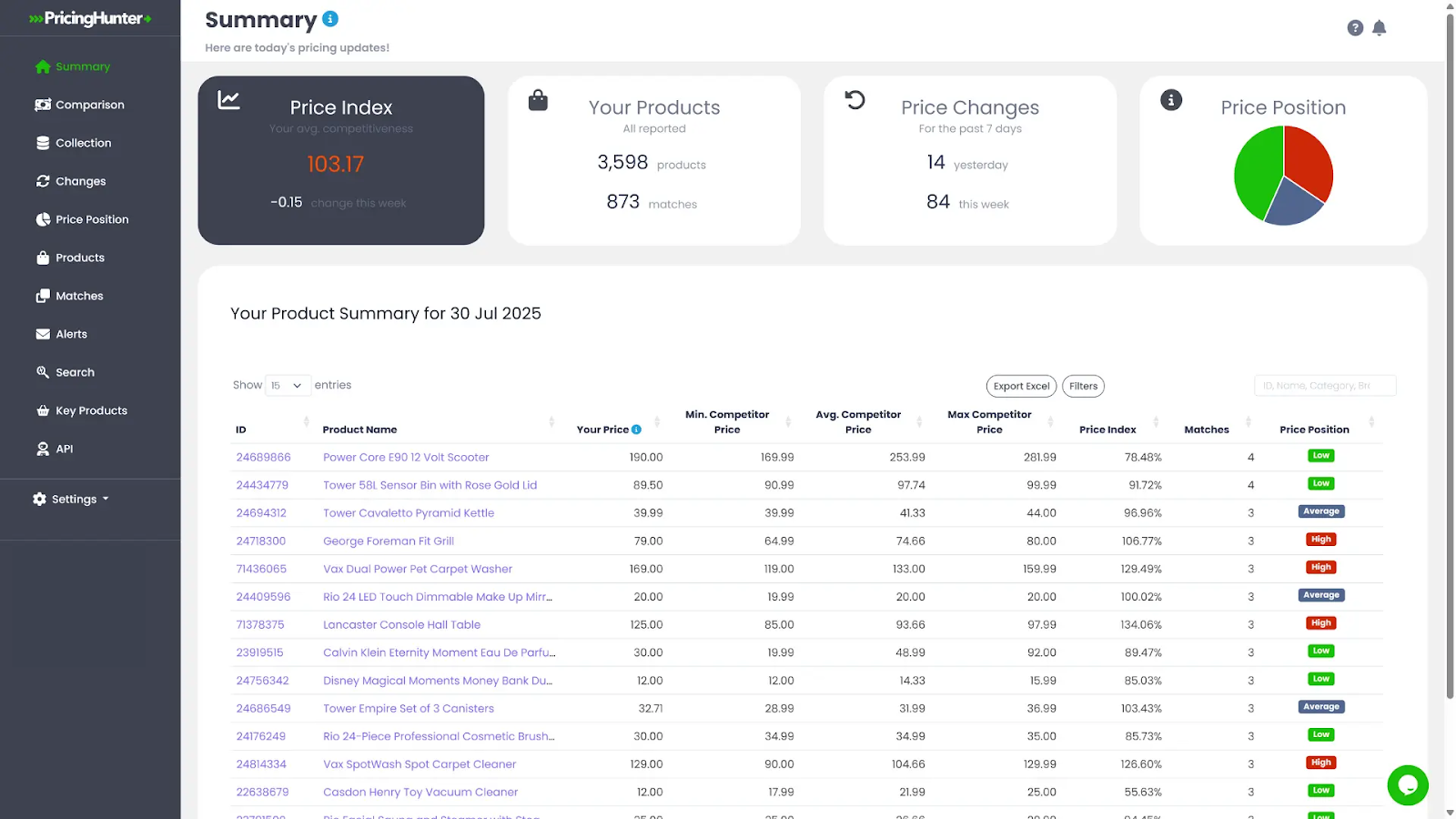
PricingHunter helps you scrape, match, and monitor competitor prices from one platform without configuring proxies, maintaining scrapers, or involving your engineering team.
What you need to do is to plug in your Google Merchant Centre, Shopify, or WooCommerce feed URL, and the platform scrapes it daily to keep your product list current. In addition, Price changes arrive in your inbox every morning, including weekends
As a result, most retailers are looking at live competitor data within minutes of signing up. Price history is stored indefinitely, so you can track patterns over months or years.
Key features
- Automated product matching with manual approval, so you control which competitor links are tracked
- Daily comparison alerts delivered to your inbox, including weekends
- Feed integration with Google Merchant Centre, Shopify, and WooCommerce
Pros
- Scraping, matching, and alerting in one subscription with no infrastructure to manage
- Feed integration keeps your catalog synced daily without manual uploads
- Weekend scraping is included, which most tools skip
Cons
- Not suited for custom scraping workflows or developer-led pipelines
Pricing
- Essential plan: $99/mo (200 products)
- Professional plan: $199/mo (2,000)
- Premium plan: $399/mo (6,000)
- 14-day free trial is available without credit card and API access costs $29/mo
2. Prisync
Best for: E-commerce retailers who want scraping to feed directly into repricing.
Scraping approach: Product-based scraping with URL, channel, and hybrid models, plus store sync.
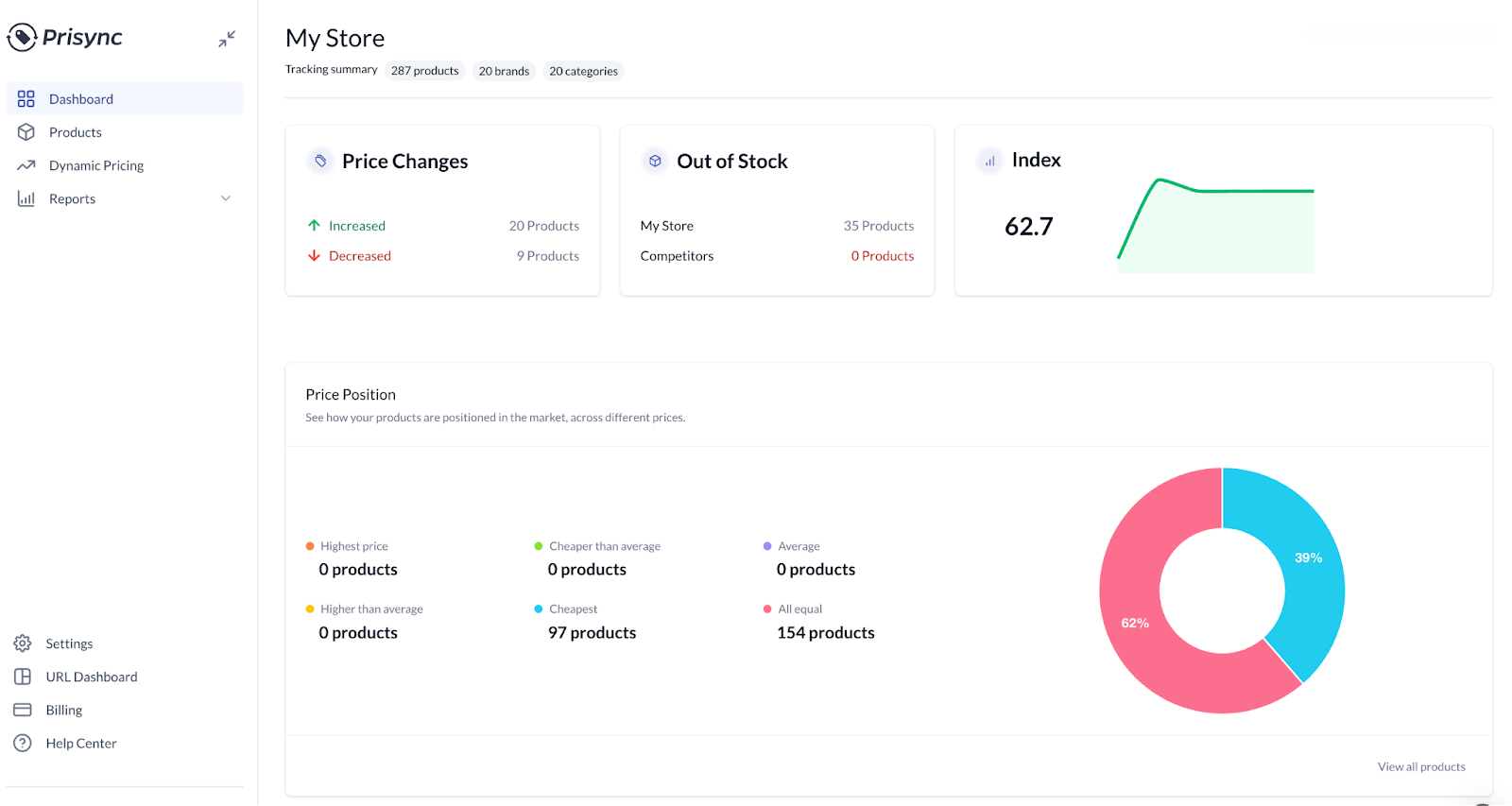
Prisync scrapes competitor prices and lets you set repricing rules that respond automatically. The platform also tracks competitor listings on Google Shopping and Amazon through barcode matching, making it easier to monitor identical products across multiple channels.
Key features
- Three scraping models: URL-based, Channel-based, Hybrid
- Dynamic repricing rules on Premium and above
- Channel-based competitor discovery from Google Shopping and Amazon
Pros
- Scraping feeds directly into repricing with no export step
- Channel-based discovery finds competitors you did not know existed
- Published pricing with a 14-day trial and free onboarding
Cons
- 20% API surcharge on every plan increases the total cost
- Nine plan combinations make comparison harder than simpler tools
Pricing
- URL-based plans: From $99/mo
- Channel-based plans: From $199/mo
- Hybrid based plans: From $299/mo
Related: Prisync pricing guide 2026: compare features, plans, and costs
3. Price2Spy
Best for: Brands that need high-frequency scraping with evidence of violations.
Scraping approach: URL-based scraping with stealth IP, up to 8 checks per day.
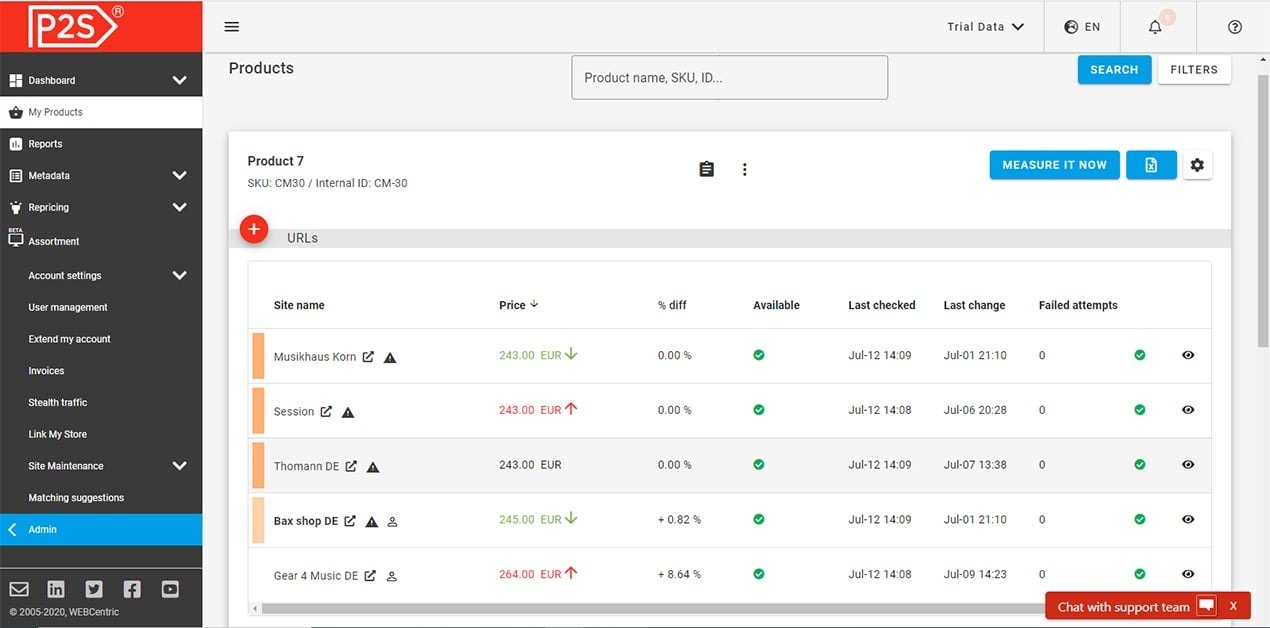
Price2Spy specialises in web price scraping for businesses that need accurate, high-frequency competitor pricing data. Its stealth IP technology helps scrape prices from websites with bot-detection systems up to 8 times daily, ensuring reliable data collection even from harder-to-monitor sources.
Key features
- Up to 8 scraping checks per day with stealth IP
- MAP violation capture with timestamped screenshots
- 25+ built-in analytical reports
Pros
- 8x daily frequency catches intra-day repricing moves
- Stealth IP handles sites that actively block scrapers
- Lowest price entry point on this list
Cons
- URL-based model burns through limits fast with multiple competitors per product
- Repricing and automatch cost extra
Pricing
- Starter plan: $39.95/mo (500 URLs)
- Basic plan: $157.95/mo (2,000 URLs)
- Premium plan: Custom
Related: See how Price2Spy compares with other competitor price-tracking tools
4. Bright Data
Best for: Enterprise teams building custom scraping infrastructure at scale.
Scraping approach: 150M+ residential proxies with browser rendering, CAPTCHA solving, and anti-bot bypassing
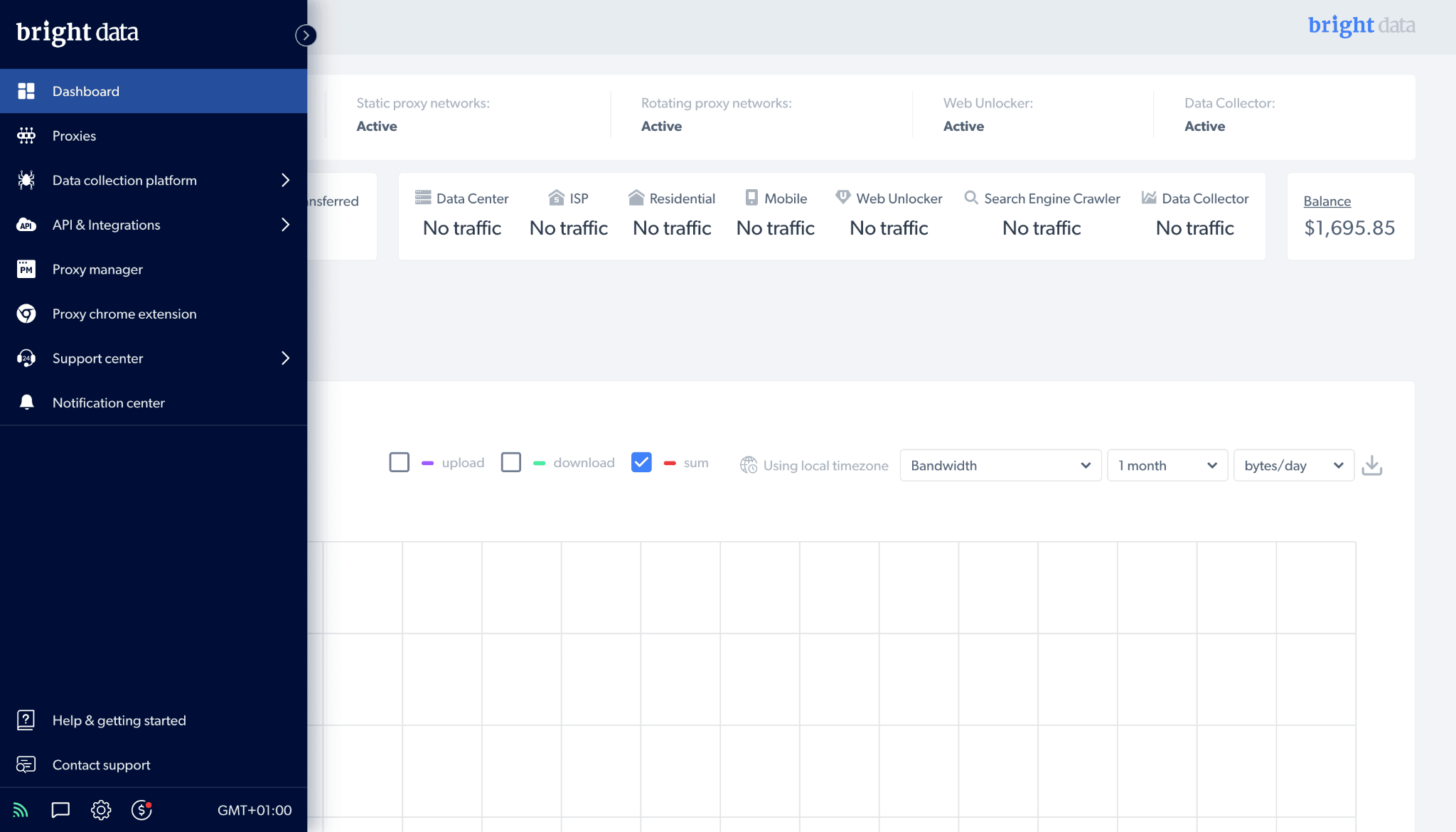
For engineering teams that need raw scraping power, Bright Data is the industry benchmark. It provides the infrastructure to scrape competitor prices at scale, with pre-built scrapers for Amazon, Walmart, eBay, and other major marketplaces
Key features
- 150M+ residential IPs with 98%+ success rate
- Pre-built e-commerce scrapers shipping structured JSON or CSV
- Ready-made datasets if you want to skip scraping
Pros
- Largest proxy network with the highest success rates
- Pre-built scrapers reduce dev time for common targets
- Pay-as-you-go from $1 per 1K records
Cons
- Requires developer resources to set up and maintain
- Subscriptions start at $499/mo for most products
Pricing
- Web Scraper API pricing: From $1.5/1K records
- One week free trial for 1k records
5. Apify
Best for: Developers who want pre-built scrapers that they can fork and customise.
Scraping approach: 6,000+ community-maintained scrapers with scheduling, versioning, and CI/CD.
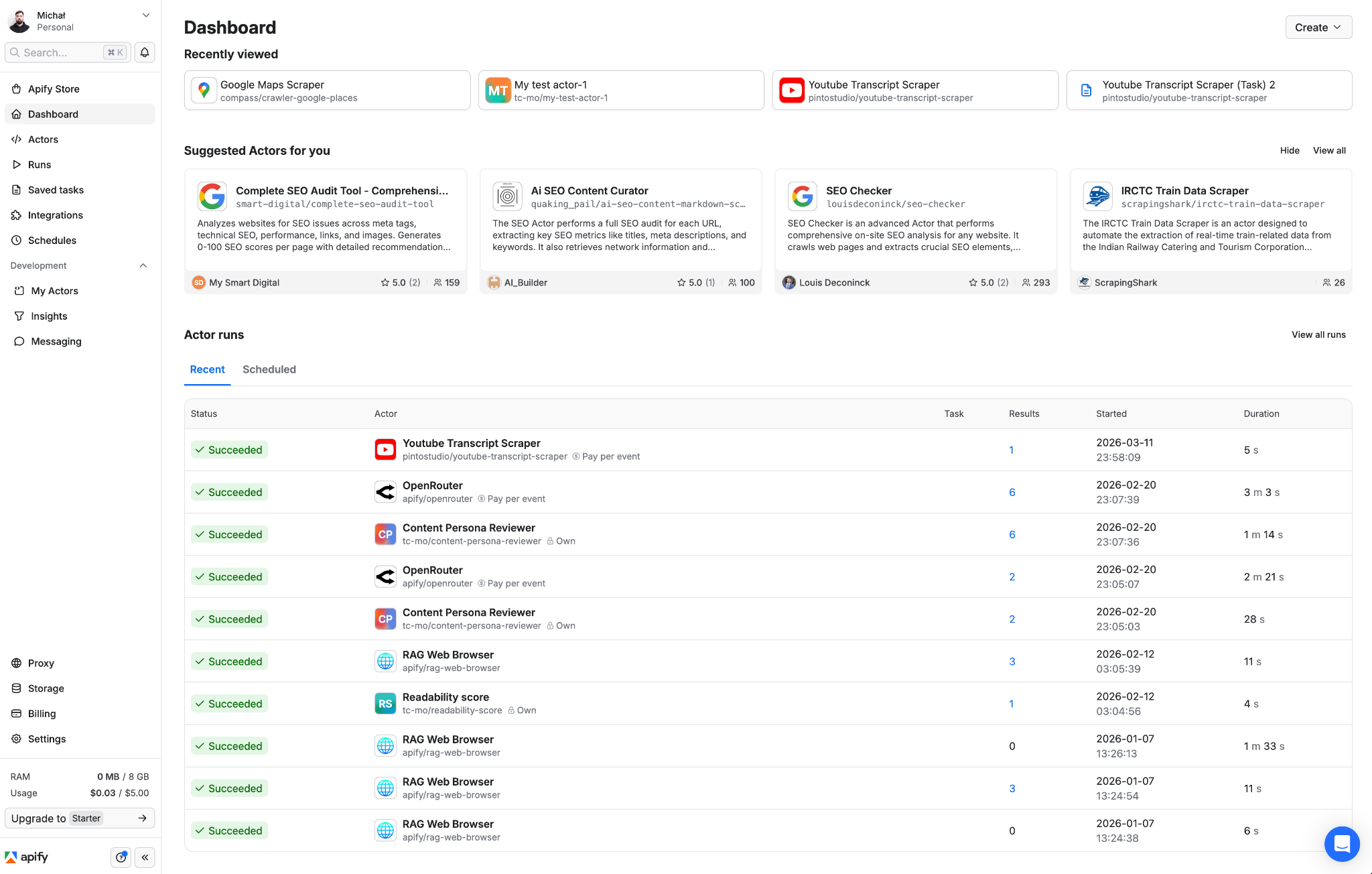
Apify strikes a middle ground between building from scratch and paying for a full enterprise platform. Its marketplace of 6,000+ pre-built actors covers Amazon, Walmart, eBay, and generic retail URLs. Fork them, schedule them, and export to JSON, CSV, or webhooks.
Key features
- 6,000+ community scrapers with version control
- Scheduling, CI/CD, and webhook exports
- Free tier with $5/mo credit
Pros
- 6,000+ scrapers reduce build time dramatically
- Version control for managing multiple workflows
- Free tier to test before committing
Cons
- Credits deplete faster than expected at high volume
- Customising actors requires JavaScript
Pricing
- Free tier plan: $5/mo credit
- Paid plan: $29/mo
- Scale plan: $199/mo
- Business plan: $999/mo
- Enterprise plan: Custom quote price
6. ShoppingScraper
Best for: E-commerce teams needing marketplace-specific scraping via REST API.
Scraping approach: REST API covering 13 marketplaces with EAN/GTIN-based matching.
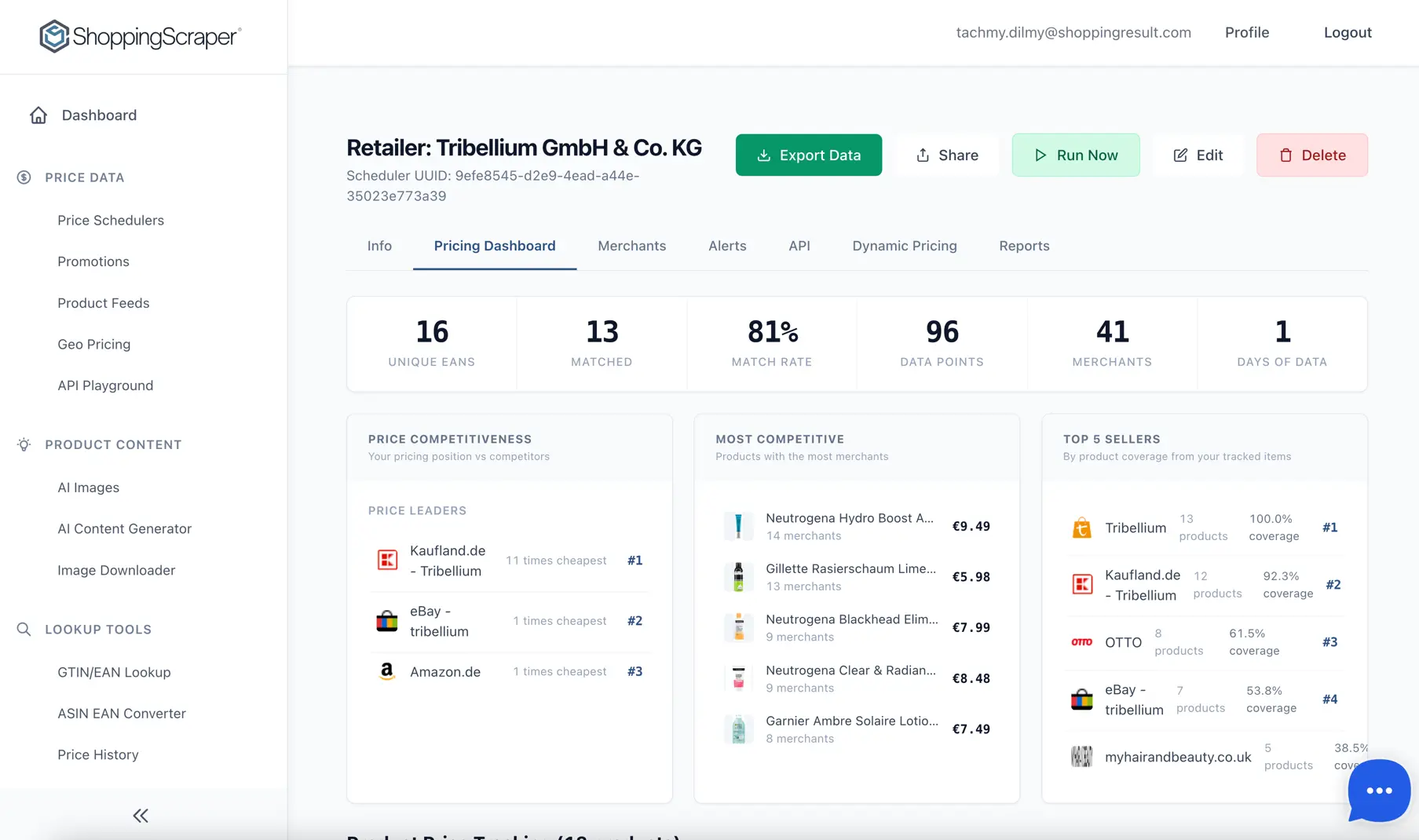
ShoppingScraper focuses exclusively on e-commerce marketplaces. By matching products using EAN and GTIN codes, the platform automatically identifies equivalent listings and returns accurate competitor prices. It also supports geo-pricing analysis across 50+ countries, helping brands compare prices across regions and optimise their pricing strategy in global markets.
Key features
- REST API for 13 marketplaces with EAN/GTIN matching
- Geo-pricing across 50+ countries with currency conversion
- Free trial with 100 API credits
Pros
- Purpose-built for marketplace scraping, not adapted from a general tool
- EAN/GTIN matching eliminates manual competitor linking
- Free trial, no credit card
Cons
- Cannot scrape arbitrary retailer websites
- Smaller user community
Pricing
- Start-up plan: €49/mo
- Growth plan: €199/mo
- Advanced plan: €399/mo
- Enterprise plan: €999+/mo
7. Priceva
Best for: Mid-size retailers wanting scraping, repricing, and MAP bundled.
Scraping approach: Automated scraping with IP rotation, proxy management, and CAPTCHA handling.
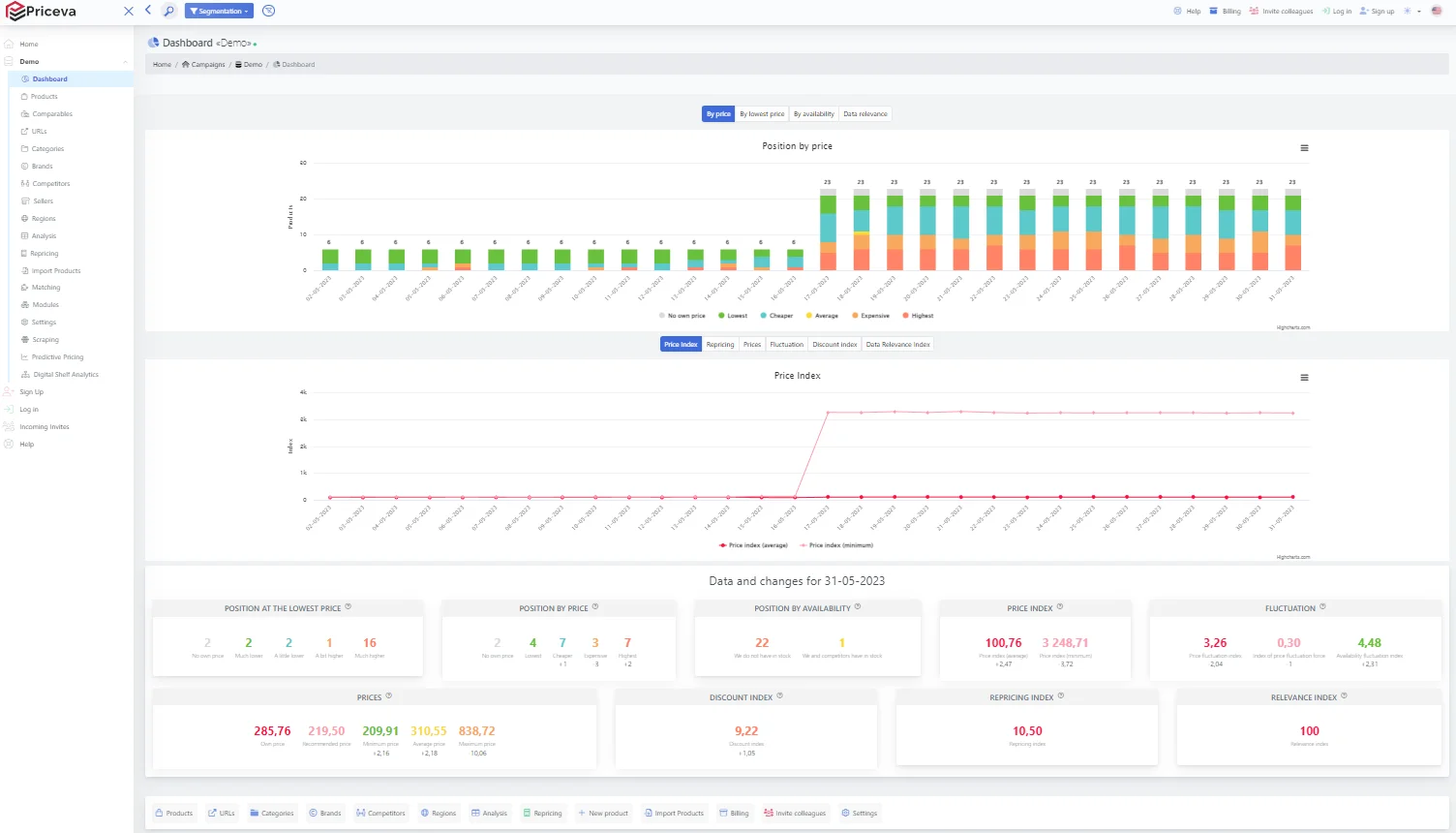
Priceva bundles scraping, repricing, MAP monitoring, and multi-format export into every paid plan. Most tools on this list charge separately for at least one of those. The scraping infrastructure runs IP rotation, proxies, and CAPTCHA resolution behind the scenes.
Key features
- Scraping, repricing, and MAP are bundled in every paid plan
- IP rotation, proxy management, and CAPTCHA handling built in
- Multi-format export: CSV, JSON, XML
Pros
- Everything bundled with no add-on costs
- Free tier to evaluate at zero cost
- Three export formats are included
Cons
- Scraping accuracy varies by source site
- Interface lags behind newer competitors
Pricing
- Free plan available
- Paid plans: From $99/mo.
8. Minderest
Best for: Brands needing scraping across online, offline, and app channels globally.
Scraping approach: AI-powered scraping across websites, shopping apps, and physical stores in 40+ countries.
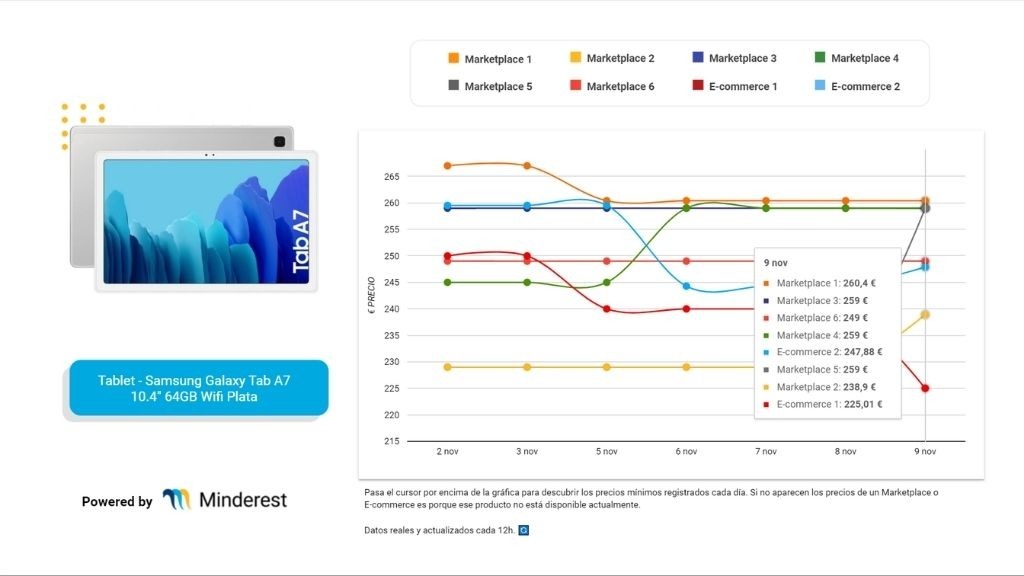
Minderest goes beyond traditional web price scraping by collecting pricing data from websites, mobile shopping apps, and even brick-and-mortar stores. Its AI-driven product matching technology helps identify equivalent products across different retailers, languages, and naming conventions, ensuring accurate competitor comparisons.
Key features
- Scraping across online, apps, and physical stores
- AI matching across languages, currencies, and naming conventions
- InStore module for brick-and-mortar capture
Pros
- Scrapes channels most competitors cannot access
- AI matching across languages without manual setup
- 400+ customers, including major global brands
Cons
- No published pricing, no trial, 3-month minimum
- Matching occasionally needs manual correction
Pricing
Custom only. Contact sales.
Related: 10 best Minderest alternatives for pricing intelligence
9. Dealavo
Best for: European brands where scraping accuracy matters more than speed.
Scraping approach: Automated scraping with manual QA on every product match.
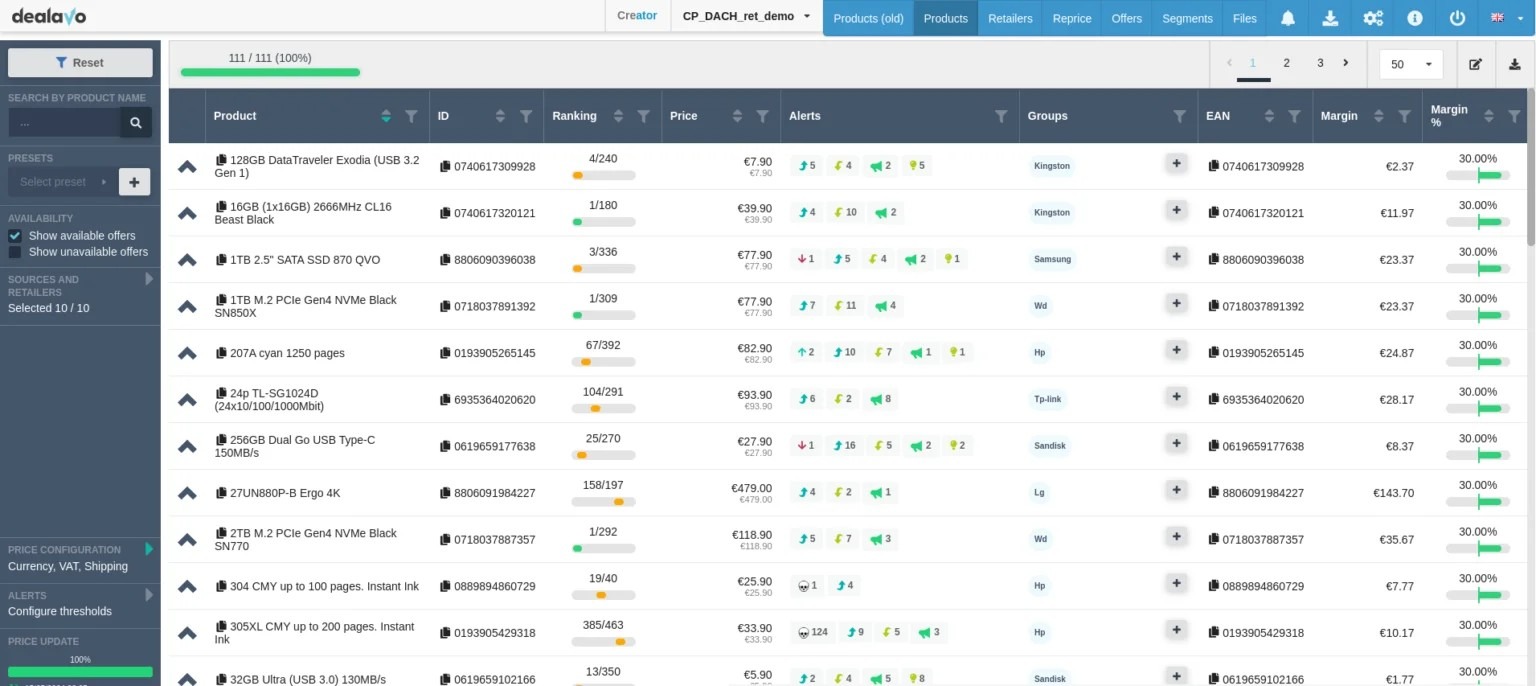
Dealavo takes a different bet than most tools on this list. Instead of prioritising speed and volume, it adds a human QA layer to every product match before the data reaches your dashboard. That matters when a wrong match damages a reseller relationship you spent months building. It also scrapes promotions and coupons alongside pricing.
Key features
- Human-verified matching on every data point
- Promotion and coupon scraping alongside pricing
- Coverage across 30+ European countries
Pros
- Human QA catches errors that automation misses
- Tracks promotions and coupons, not just prices
- 7-day free trial
Cons
- Verification adds latency vs fully automated tools
- Thinner coverage outside Europe
Pricing
Custom. 7-day free trial.
10. Octoparse
Best for: Non-technical teams who need to scrape without code.
Scraping approach: Point-and-click visual scraper with prebuilt templates and cloud scheduling.
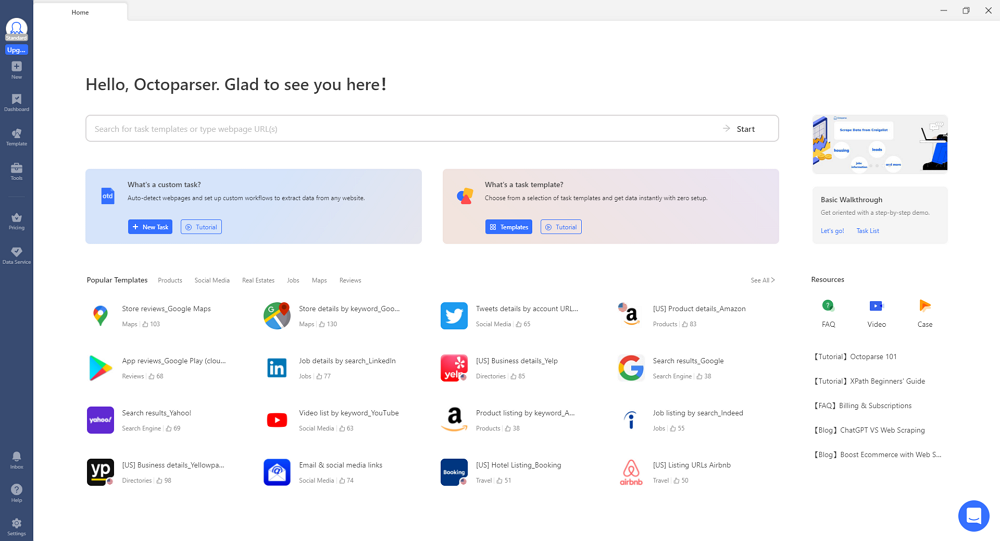
For teams that need scraped data but do not have anyone who writes code, Octoparse is the most accessible option on this list. You build a scraper by pointing at a page and clicking the data you want. Prebuilt templates cover Amazon, eBay, AliExpress, and Walmart. Tasks run in the cloud and export to Excel, CSV, JSON, or databases. The zero learning curve for basic jobs makes it practical for non-technical teams.
Key features
- No-code point-and-click scraper builder
- Prebuilt templates for major marketplaces
- Cloud scheduling with multi-format exports
Pros
- Truly no-code, anyone can build a scraper
- Templates get you to data in minutes
- Free tier to test
Cons
- Less flexible than API tools for complex workflows
- Advanced features locked behind higher tiers
Pricing
- Free tier
- Standard plan: $89/mo
- Professional plan: $249/mo
- Enterprise plan: Custom
Related: We compared 10 e-commerce price-scraping tools to see how they handle competitor data extraction, product matching, anti-bot bypassing, and pricing intelligence.
Start scraping competitor prices today
Not every scraping tool delivers the same value at the same price point. Some charge per URL, so costs balloon the moment you add a fifth competitor. Others hand you raw data in a CSV and leave the matching, formatting, and interpretation to your team. A few require developers to provide resources just to get started.
A web price scraping tool like PricingHunter gives you what you actually need to act on competitor data: automated product matching, daily alerts to your inbox, including weekends, unlimited competitor tracking, and price history that never expires.
For e-commerce teams that need competitor pricing intelligence from day one, PricingHunter is worth considering. Try PricingHunter free for 14 days.
Frequently asked questions
1. Is web scraping legal for e-commerce pricing?
Scraping publicly available pricing data is generally legal. However, legality depends on the website’s terms of service and how the data is used. Avoid scraping behind login walls.
2. How often should I scrape competitor prices?
Fast-moving categories may need multiple daily checks. Stable categories work with daily or weekly updates. Price2Spy offers up to 8 checks per day. PricingHunter updates daily, including weekends.
3. Do I need a developer to use scraping tools?
Not always. PricingHunter, Prisync, and Octoparse are built for non-technical users. Bright Data and Apify require developer skills.